Introduction
You’ve just bought your first crochet hook, watched a few YouTube tutorials, and you’re ready to create something beautiful—maybe a cozy scarf, a cute dishcloth, or even your first amigurumi. But before you dive in, there’s one crucial decision that can make or break your experience: choosing the right yarn.
For beginners, not all yarns are created equal. Some are slippery, some split easily, some vanish into a fuzzy blur—you get the picture. The good news? The perfect beginner yarn exists, and it’s probably easier to find (and more affordable) than you think.
In this guide, we’ll walk you through the best yarn types for new crocheters, explaining why texture, weight, fiber content, and color matter more than you might expect. You’ll learn which yarns make stitches easy to see, which ones are forgiving of mistakes, and which to avoid until you’ve mastered the basics. Plus, we’ll share real-life tips on where to buy affordable practice yarn and how to read yarn labels like a pro.
Whether you’re crocheting for relaxation, gifts, or a new creative outlet, starting with the right yarn sets you up for confidence, fewer frustrations, and a whole lot more fun.
Why Yarn Choice Matters More Than You Think
When you’re just learning to chain, single crochet, or count stitches, your yarn is your teacher. A beginner-friendly yarn has clear stitch definition, consistent thickness, and just enough grip to hold its place on the hook without slipping or tangling.
Imagine trying to learn piano on sticky keys—or writing with a pen that skips. That’s what it’s like using fuzzy, splitty, or super-thin yarn as a beginner. You’ll spend more time untangling knots or guessing where your next stitch goes than actually enjoying the process.
On the flip side, the right yarn makes every stitch pop, so you can see your progress clearly and fix mistakes easily. It’s smooth enough to glide but not so slick that it slides right off your hook. And ideally, it’s affordable—because yes, you’ll likely frog (rip out) your first few projects… and that’s totally okay!
The bottom line: Your first yarn shouldn’t be your “forever” yarn—it should be your “learning” yarn. Think of it as training wheels for your hook.
#1: Medium-Weight (Worsted or Aran) Acrylic Yarn – The Gold Standard
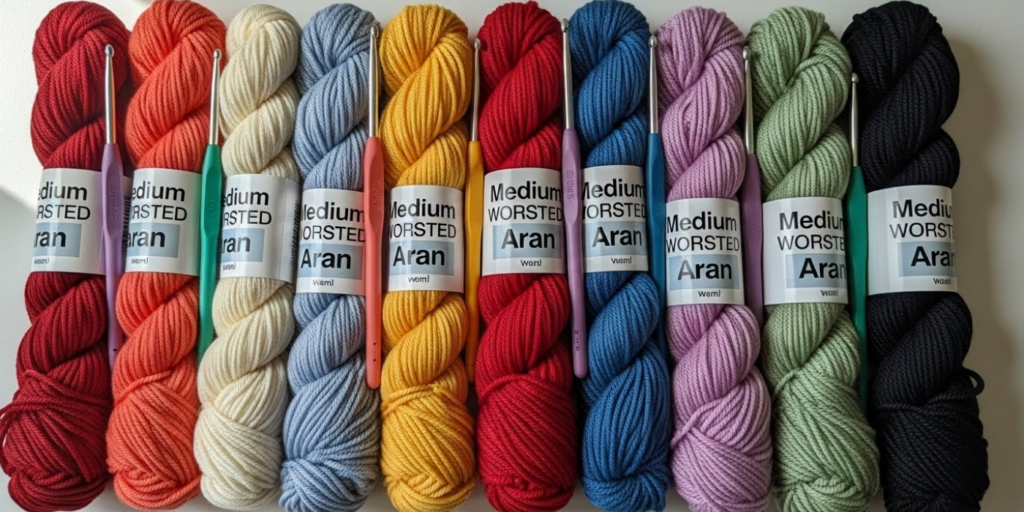
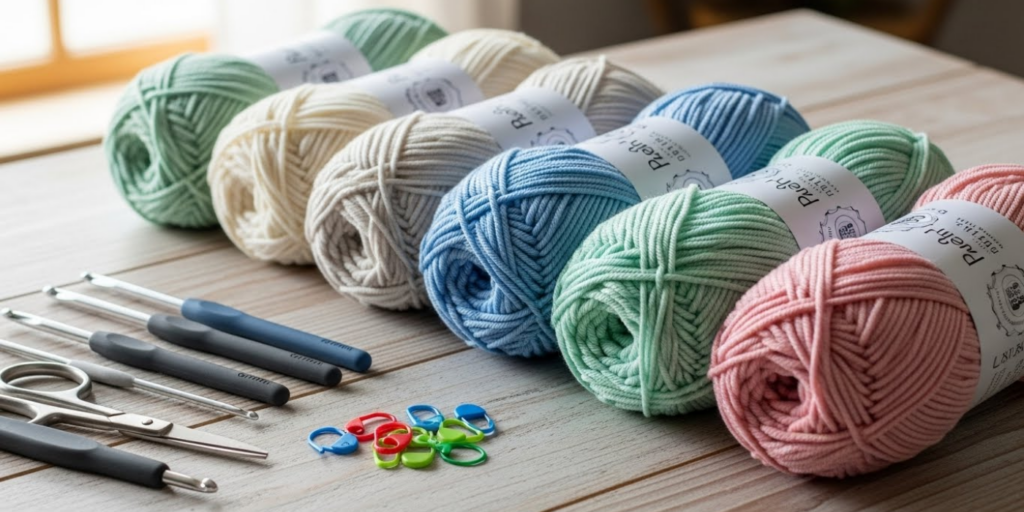
If there’s one yarn every beginner should start with, it’s medium-weight (Category 4) acrylic yarn—often labeled as “worsted” or “aran” weight.
Why it’s ideal:
- Easy to handle: Not too thick, not too thin—just right for standard hooks (like size I-9 or J-10).
- Stitch definition: Smooth texture lets you clearly see each stitch, making it easier to count and correct errors.
- Affordable: Brands like Red Heart Super Saver, Caron Simply Soft, or Lion Brand Basic Stitch cost just $2–$5 per skein.
- Forgiving: Holds its shape well but isn’t stiff, so your hands won’t cramp.
- Widely available: Found at Walmart, Michaels, Joann, and even online in every color imaginable.
Real-life example:
Sarah, a new crocheter, tried starting with bulky wool but kept losing stitches in the fuzzy fibers. After switching to worsted-weight acrylic in a light solid color, she finished her first scarf in a week—and actually enjoyed it!
Pro tip: Choose a solid or semi-solid color (avoid variegated or dark hues at first). Light colors like cream, mint, or sky blue make it easier to distinguish stitches under most lighting.
#2: Cotton Yarn – Great for Dishcloths and Summer Projects
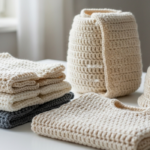
Once you’ve mastered a few basics, medium-weight cotton yarn is a fantastic second step—especially for practical projects like dishcloths, coasters, or market bags.
Benefits of cotton:
- Non-stretchy: Unlike acrylic, cotton holds its shape, so your stitches stay consistent.
- Absorbent and durable: Perfect for kitchen or bath items.
- Crisp stitch definition: Each loop stands out clearly, great for learning textured stitches like bobbles or post stitches.
Popular beginner-friendly cottons include Lion Brand 24/7 Cotton, Sugar ‘n Cream, or Peaches & Creme.
But be aware: Cotton is less elastic than acrylic, which can make it slightly harder on your hands during long sessions. It’s also heavier, so big projects (like blankets) may feel dense.
Best beginner project with cotton: A simple waffle-stitch dishcloth. It’s small, useful, and teaches you how tension affects the final fabric.
#3: Avoid These Yarns—At Least for Now
Not all yarns are beginner-friendly—and that’s okay! Save these for later, once your hands and eyes are trained:
- Fuzzy or novelty yarns (like eyelash, bouclé, or chenille): Stitches disappear into the fluff. You won’t be able to see where to insert your hook.
- Very thin yarns (lace or fingering weight): Require tiny hooks and sharp eyes. One missed stitch can unravel your whole row.
- Super bulky or roving yarns: Hard to control, and mistakes are tough to undo without damaging fibers.
- Dark or wildly variegated yarns: Patterns in color make it hard to track rows or spot errors.
- 100% wool (unsuperwash): Can felt if you frog too much, and some types are sticky or splitty for new hands.
Think of it like learning to drive: You wouldn’t start on a mountain road in a sports car. Stick to the “automatic sedan” of yarns first—smooth, predictable, and forgiving.
#4: Understanding Yarn Labels – Your Secret Weapon
Ever stared at a yarn label confused by symbols and numbers? Those aren’t just decoration—they’re your roadmap to success.
Key things to look for:
- Yarn Weight Symbol: A number from 0 (lace) to 7 (jumbo). Look for #4 for worsted/aran weight.
- Recommended Hook Size: Usually listed in both U.S. and metric (e.g., “I-9 / 5.5 mm”).
- Fiber Content: “100% Acrylic” or “100% Cotton” is clearer than blends when you’re learning.
- Care Instructions: Acrylic can usually be machine-washed—great for practice swatches!
- Dye Lot Number: Always buy enough skeins from the same dye lot to avoid color shifts in your project.
Pro move: Keep the label! Tape it to your project bag or snap a photo. It’ll save you headaches later if you need more yarn.
Many craft stores offer free yarn guides or apps (like Yarnspirations) that decode labels and suggest patterns—perfect for beginners.
#5: Where to Buy (and How to Save)

You don’t need to spend a fortune to start. In fact, budget-friendly acrylic is your best friend right now.
Top places to shop:
- Walmart: Red Heart Super Saver is often $2–$3/skein.
- Michaels or Joann: Use their 40–50% off coupons (available in-store or via app) on premium acrylics like Caron.
- Dollar Tree: Believe it or not, they carry basic worsted-weight yarn for $1.25—great for swatching!
- Online: Check out WeCrochet or LoveCrafts for beginner kits with curated yarn + hooks.
Smart saving tip: Buy one skein at a time until you know what you like. No need to stockpile yarn you might not use.
And remember: your first project doesn’t need “premium” materials. What matters is practice, not perfection.
Bonus: How to Test Yarn Before You Commit
Not sure if a yarn is beginner-friendly? Try this 30-second test in the store:
- Pinch a strand between your fingers. Does it feel smooth? Or does it fuzz, split, or feel slippery?
- Look closely at the twist. Is it evenly spun? Loose or messy yarn = more splitting.
- Try a few stitches (bring a hook!). Can you easily insert your hook and pull up a loop? Does the yarn glide or snag?
If it passes all three, it’s likely a good match for your skill level.
Conclusion: Start Simple, Stitch Confidently
Choosing the right yarn isn’t about fancy fibers or trendy colors—it’s about setting yourself up for success. Medium-weight acrylic in a light, solid color gives you the clarity, consistency, and affordability you need to build confidence stitch by stitch. Add cotton for practical projects once you’re ready, and save the fuzzy, sparkly, or super-thin yarns for when your hands know exactly what they’re doing.
Remember: every expert crocheter started exactly where you are—fumbling with a hook, dropping stitches, and wondering if they’d ever “get it.” The secret? They kept going… with the right yarn in hand.
So grab that skein of worsted-weight acrylic, pick a simple pattern, and give yourself permission to learn. Mistakes aren’t failures—they’re part of the journey.
We’d love to hear from you: What was the first yarn you used when you started crocheting? Did it help—or frustrate you? Share your story or questions in the comments below! And if this guide helped you, please share it with a friend who’s thinking about picking up a hook. Happy crocheting!
Sophia Williams is a crochet enthusiast who found in yarn and hooks a creative way to express calm, patience, and love for handmade art. Focused on the crochet niche, she shares her experience, techniques, and inspiration with those who want to learn, relax, and create meaningful pieces stitch by stitch.