Introduction
If you’ve ever held a piece of Tunisian crochet, you know it feels like magic—dense yet drapey, textured like woven fabric, with a richness that ordinary crochet rarely achieves. Often called “Afghan crochet,” this hybrid technique blends elements of knitting and traditional crochet to create fabric that’s uniquely structured, reversible, and endlessly versatile.
But while the basic Tunisian Simple Stitch might feel familiar, the real artistry begins when you move beyond the fundamentals. Mastering advanced Tunisian stitches and patterns unlocks a world of design possibilities—from intricate lace shawls and modern sweaters to home décor with heirloom quality.
In this guide, we’ll explore the next level of Tunisian crochet for crafters who’ve conquered the basics and are ready for more. You’ll discover essential advanced stitches, learn how to read and adapt complex charts, troubleshoot common challenges (like curling edges and tension issues), and even design your own motifs. Whether you dream of publishing patterns or simply want your projects to look polished and professional, these techniques will take your skills to new heights.
Grab your long Afghan hook—it’s time to weave your way into mastery.
Why Go Beyond the Basics? The Power of Advanced Tunisian Techniques
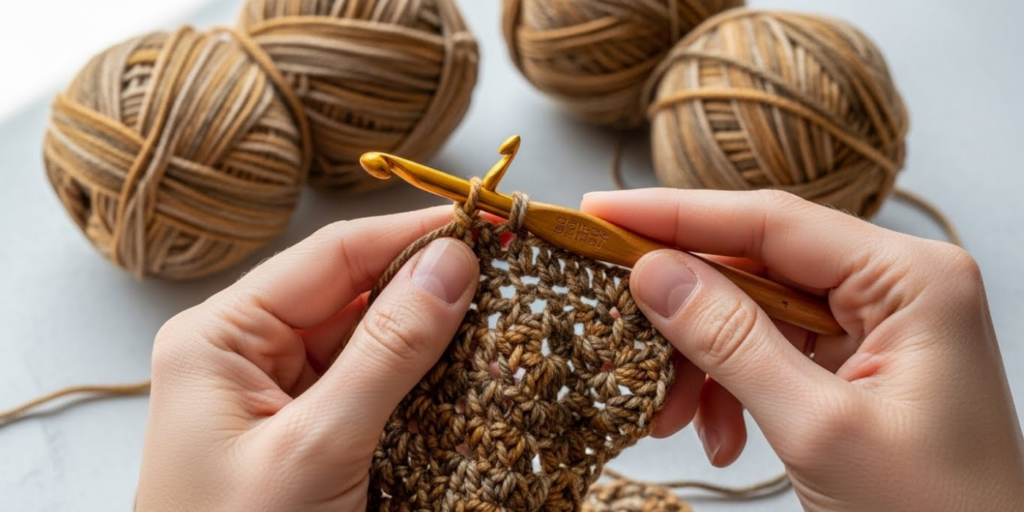
Many crocheters stick with the Tunisian Simple Stitch because it’s reliable and meditative. But limiting yourself means missing out on texture, drape, and visual depth that only advanced stitches can provide.
For example, the Tunisian Knit Stitch mimics stockinette knitting with a smooth, fluid surface perfect for garments. The Tunisian Purl Stitch adds subtle ribbing ideal for cuffs and collars. And stitches like the Tunisian Shell or Bobble introduce dimension without bulk.
Moreover, advanced techniques let you control fabric behavior. Basic Tunisian fabric tends to curl—a frustration for many. But by combining stitches (like alternating knit and purl rows) or working in the round, you can create balanced, flat pieces that behave beautifully.
Real-world impact: Designer Marnie MacLean used a custom Tunisian lace pattern in her “Desert Bloom Shawl,” which went viral on Ravelry—not because it was easy, but because it showcased the unique potential of Tunisian crochet when pushed creatively.
In short, advancing your skills transforms Tunisian crochet from a novelty into a serious design tool—one that rivals knitting in sophistication while retaining crochet’s speed and accessibility.
Essential Advanced Stitches Every Tunisian Crocheter Should Know
Ready to level up? Here are five advanced stitches that form the foundation of most complex Tunisian patterns. Practice each in swatches before diving into full projects.
1. Tunisian Knit Stitch (tks)
How to: Instead of inserting your hook under the front vertical bar, insert it between the front and back bars, as if you were knitting. Yarn over and pull through.
Effect: Creates a smooth, slightly ribbed surface with excellent drape—ideal for lightweight garments.
2. Tunisian Purl Stitch (tps)
How to: Bring the yarn to the front, insert hook under the front vertical bar, then yarn over and pull through to the front.
Effect: Produces pronounced horizontal ridges. Combine with tks for reversible ribbing.
3. Tunisian Full Stitch (tfs)
How to: Work a standard forward pass, but on the return pass, yarn over and pull through only one loop at a time (like regular crochet).
Effect: Reduces curling and adds elasticity—great for borders and edgings.
4. Tunisian Cable Stitch
How to: Use a cable needle or extra hook to hold 2–3 vertical bars, skip stitches, work ahead, then return to the held bars.
Effect: Creates bold, twisted cables without breaking the fabric’s integrity.
5. Tunisian Lace Stitches (e.g., Eyelet or Mesh)
How to: Incorporate yarn overs and skipped stitches on the forward pass, then work them together on the return.
Effect: Airy, openwork fabric perfect for shawls and summer tops.
Pro tip: Always swatch in the stitch pattern you plan to use—measuring gauge after blocking. Tunisian fabric can relax dramatically when wet-blocked.
These stitches are your new alphabet. Once you know them, you can “read” and even write your own patterns.
Working with Charts, Colorwork, and Pattern Adaptation
Unlike basic written instructions, advanced Tunisian patterns often rely on charts—grids that map each stitch visually across rows. At first glance, they can seem intimidating, but they’re actually more intuitive once you understand the logic.
How to read a Tunisian chart:
- Each square = one vertical bar (one stitch)
- Right-side rows = forward pass; wrong-side = return pass
- Symbols indicate stitch type (e.g., circle = yarn over, dot = purl)
Colorwork in Tunisian crochet is also uniquely rewarding. Because you hold multiple yarns across the row, stranding or tapestry techniques work beautifully for geometric designs. Just be mindful not to pull too tightly—Tunisian fabric doesn’t stretch like knitting.
Adapting existing patterns: Want to turn a basic blanket into a color-blocked masterpiece? Try:
- Alternating stitch patterns every few rows (e.g., 4 rows tks, 4 rows shell)
- Using gradient yarns to highlight texture
- Adding a lace border to a solid Tunisian panel
Design insight: Tunisian crochet shines when you mix stitch densities. A dense center with an open lace edge creates stunning contrast—think of it like framing a painting.
Don’t be afraid to experiment. The most striking Tunisian pieces often come from thoughtful customization, not rigid rule-following.
Troubleshooting Common Challenges (and How to Fix Them)
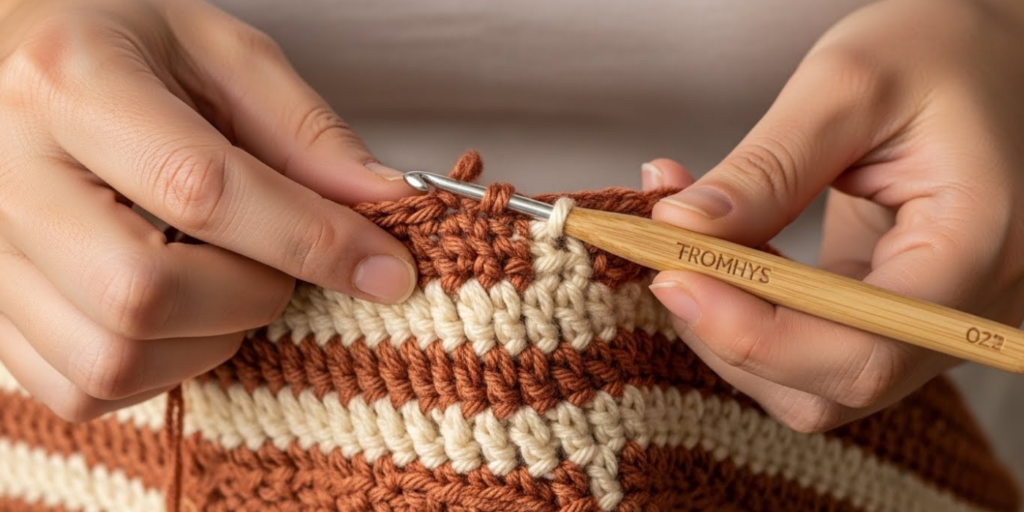
Even seasoned Tunisian crocheters face hurdles. Here’s how to solve the big three:
1. Curling Edges
Cause: The return pass creates tighter stitches than the forward pass, causing imbalance.
Fix:
- Use a larger hook for the return pass (many advanced crocheters keep two hooks handy)
- Work a border in Tunisian Full Stitch or single crochet to stabilize
- Block aggressively—wet-blocking can relax curl by 70–90%
2. Tight Tension and Hand Fatigue
Cause: Holding many loops on a long hook strains hands, especially with cotton or non-stretchy yarns.
Fix:
- Switch to a hook with a flexible cable (like those from Tulip or ChiaoGoo)
- Use bamboo or ergonomic hooks to reduce wrist strain
- Take breaks every 20 minutes—stretch your fingers and shake out tension
3. Running Out of Hook Space
Cause: Tunisian projects hold every stitch on the hook during the forward pass—wide pieces can exceed hook length.
Fix:
- Work in panels (e.g., make squares, then seam)
- Use a circular Tunisian hook (yes, they exist!) for large widths
- Try Tunisian crochet in the round for seamless tubular projects like cowls
Encouragement: These “problems” aren’t failures—they’re signs you’re pushing your craft forward. Every fix you learn makes you a more resilient, resourceful maker.
From Practice to Project: Designing Your Own Advanced Piece
Now that you’ve built your stitch library and solved technical hurdles, it’s time to create something original.
Start small: Design a textured pillow cover using 3–4 stitch patterns. Sketch a 10×10 grid, assign a stitch to each section, and swatch combinations. Notice how light plays across ridges and valleys—this is where Tunisian truly sings.
For garments, consider modular construction: Make Tunisian panels (front, back, sleeves) separately, then seam with mattress stitch for a clean finish. This avoids the curling and weight issues of one-piece yokes.
Or go bold: Draft a lace shawl using eyelet repeats that grow outward from the center. Tunisian lace holds its shape better than traditional crochet lace, making it ideal for wearable art.
Inspiration: The 2024 Crochet Guild of America featured a Tunisian “Desert Wave” cardigan that combined tks, cables, and color gradients—proving this technique belongs on fashion runways, not just in cozy blankets.
Remember: Your voice matters. The crochet world needs fresh perspectives—and yours could be the next breakthrough.
Final Thoughts: The Art of Intentional Craft
Mastering advanced Tunisian crochet isn’t just about technical skill—it’s about intention. It’s choosing the right stitch to convey warmth, movement, or elegance. It’s understanding how yarn, hook, and tension interact to create fabric with soul.
Every loop you draw through is a decision. Every row, a layer of meaning. And when you finish a piece that’s truly yours—textured, balanced, and deeply personal—you’re not just crocheting. You’re communicating.
Conclusion
Tunisian crochet offers a rich, underexplored frontier for advanced makers. By learning advanced stitches like the Tunisian Knit, Purl, and Lace variants, mastering chart reading, solving common structural issues, and daring to design your own patterns, you transform from follower to creator.
This journey demands patience and practice—but the rewards are fabric with unparalleled depth, projects that stand out in a sea of sameness, and the quiet confidence of true mastery.
So revisit that swatch you set aside. Try a cable you’ve never attempted. Sketch a pattern no one’s published yet. The hook is in your hand—now weave something only you can make.
We’d love to see your creations! What advanced Tunisian project are you dreaming of? Have you conquered curling or invented a new stitch combo? Share your journey in the comments below, or tag us in your makes on social media. And if this guide sparked an idea, pass it along to a fellow Tunisian enthusiast—because the craft grows richer when we create together.

Sophia Williams is a crochet enthusiast who found in yarn and hooks a creative way to express calm, patience, and love for handmade art. Focused on the crochet niche, she shares her experience, techniques, and inspiration with those who want to learn, relax, and create meaningful pieces stitch by stitch.