Introduction
There’s something deeply comforting about wrapping yourself in a handmade sweater—especially one you’ve crafted yourself. Whether it’s a chunky, oversized cardigan for winter evenings or a breezy, openwork top for summer strolls, a well-made crochet sweater isn’t just clothing—it’s a wearable hug. And the best part? You don’t need to be a master crocheter to create one.
Gone are the days when “crochet sweaters” meant only bulky, boxy designs from decades past. Today’s patterns blend modern silhouettes, thoughtful construction, and seasonal versatility—so you can stay cozy and stylish year-round. From lightweight cotton blends to warm wool mixes, there’s a perfect crochet sweater for every month of the year.
In this guide, we’ll explore four standout sweater styles—one for each season—along with tips on choosing the right yarn, understanding sweater construction, and customizing fit without advanced tailoring skills. You’ll also discover beginner-friendly patterns that prioritize comfort and wearability over complexity. Whether you’re dreaming of your first sweater or looking to expand your handmade wardrobe, you’ll find inspiration (and practical advice) to make it happen. So grab your hook, pick your favorite yarn, and let’s stitch a little cozy into every season.
Why Crochet Sweaters Are Worth the Effort
Before diving into patterns, let’s talk about why crocheting a sweater is such a rewarding project. Yes, it takes time—but the payoff is huge.
First, you control every detail: the fit, the length, the sleeve style, the neckline, and even the drape. No more settling for “almost right” off-the-rack sizes. With crochet, you can adjust armholes for mobility, shorten hems for petite frames, or add extra ease for lounging.
Second, crochet offers unmatched texture. That basketweave stitch? The ripple of a shell pattern? The airy grace of lace? These textures add visual interest and tactile warmth that store-bought knits often lack.
Moreover, making your own sweater is sustainable and personal. You’re investing in slow fashion—creating one thoughtful piece instead of buying five fast-fashion items that wear out quickly. Plus, every time you wear it, you’ll remember the hours of calm focus, the rhythm of your hook, and the pride of saying, “I made this.”
And contrary to popular belief, you don’t need advanced skills. Many modern sweater patterns use simple stitches (single crochet, double crochet, half-double) and clever construction (like top-down raglan or seamless rectangles) to keep things manageable—even for confident beginners.
Spring: The Lightweight Cardigan – Breezy, Layer-Friendly, and Easy

Spring calls for pieces that transition effortlessly from cool mornings to warm afternoons. Enter the lightweight open-front cardigan—a crochet staple that’s as practical as it is pretty.
Look for patterns worked in DK or sport-weight cotton, bamboo, or linen blends. These fibers breathe well, resist odor, and drape beautifully. Avoid acrylic for spring—it traps heat and feels sticky when you’re active.
A great beginner-friendly choice is the “Cloud Cardi” by Make & Do Crew—a top-down, seamless design using half-double crochet in the third loop. This creates a subtle ribbed texture that’s stretchy and flattering without complicated shaping. The pattern includes clear schematics and video support, and it works up quickly in just 3–4 skeins.
Why it works for spring:
- Open front = easy layering over tees or dresses
- ¾ sleeves = perfect for changeable temps
- Neutral colors (like oatmeal, sage, or sky blue) go with everything
Customization tip: Add buttonholes or a single wooden toggle if you prefer closure. Or lengthen the hem for a tunic-style look over leggings.
This style is also ideal for using stash yarn—as long as your gauge matches, you can mix and match leftover skeins for a unique ombré effect.
Summer: The Mesh Pullover – Airy, Stylish, and Surprisingly Practical
“But crochet in summer?” Absolutely! The secret is openwork stitches and plant-based yarns.
Summer sweaters aren’t about warmth—they’re about sun protection, bug defense, and modesty over swimwear or tank tops. A lightweight mesh pullover in cotton or linen offers all three while looking effortlessly chic.
Try the “Breeze Pullover” pattern—a simple rectangle construction with lace mesh panels down the sides. Worked in a cotton-linen blend with a larger hook (size I/5.5mm), it creates a fabric that’s cool to the touch and full of movement. The dropped shoulders and relaxed fit ensure airflow, while the V-neck keeps it flattering.
Key summer features:
- Mesh or filet crochet = maximum breathability
- Short or cap sleeves = sun coverage without overheating
- Light colors (ivory, coral, seafoam) reflect sunlight
Don’t worry about it being “too see-through.” Wear it over a camisole or swimsuit, and the texture adds dimension rather than revealing too much.
Pro tip: Always swatch and wash your swatch! Cotton and linen relax and grow when wet—so your finished sweater might stretch if you don’t account for it in your gauge.
This is also a great chance to learn blocking, which opens up lace patterns and evens out stitches for a polished finish.
Fall: The Textured Pullover – Warm, Rustic, and Perfect for Cozy Days
When leaves turn and evenings chill, reach for a textured, full-coverage pullover in warm, earthy tones. Think cables (yes, you can crochet faux cables!), bobbles, or ribbed panels that trap heat and add visual depth.
The “Harvest Sweater” by Daisy Cottage Designs is a fan favorite—worked in worsted-weight wool blend with a honeycomb stitch that’s easier than it looks. It’s constructed in two rectangles (front and back) plus sleeves, then seamed for durability. The deep ribbed hem and cuffs hug your body just enough to keep warmth in.
Why wool blends shine in fall:
- Wool is naturally temperature-regulating
- It resists wrinkles and odors
- It holds stitch definition beautifully
If you’re sensitive to wool, choose a merino blend or acrylic-wool mix (like Lion Brand Wool-Ease). You’ll get the warmth without the itch.
Fit note: For fall sweaters, aim for positive ease (1–3 inches larger than your bust) so you can layer over long-sleeve tees or flannels.
This is also the season to play with colorwork—try a Fair Isle-inspired yoke or stripes in amber, olive, and rust. Just remember: more color changes = more ends to weave in!
Winter: The Oversized Cardigan – Chunky, Luxe, and Made for Lounging
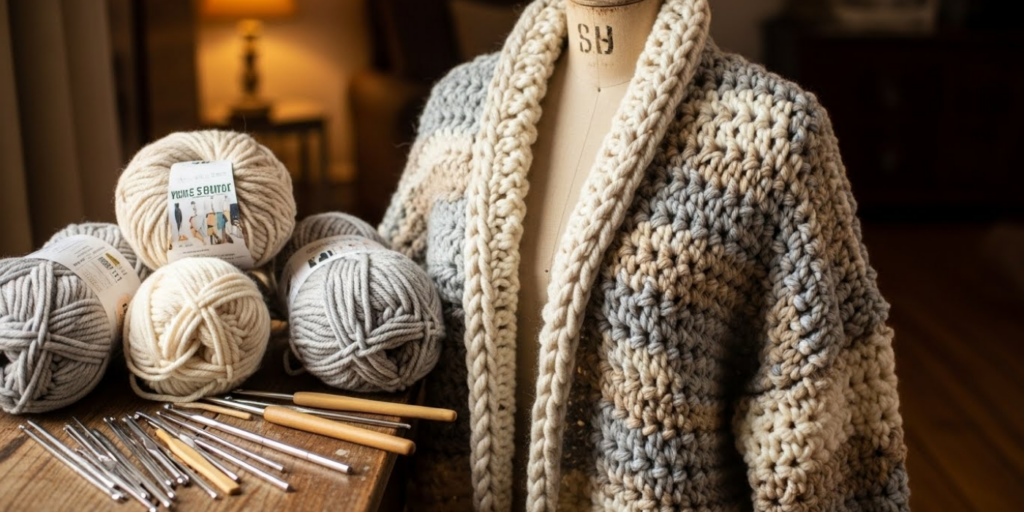
Winter sweaters should feel like a blanket you can wear—and the oversized, chunky cardigan delivers. Thick yarn, large hooks, and minimal shaping mean this project works up fast and feels indulgent.
Look for patterns using super bulky yarn (size 6) like Bernat Blanket or Lion Brand Thick & Quick. The “Snuggle Cardi” by TL Yarn Crafts uses just two rectangles and simple single crochet—ideal for beginners. With tassels or fringe on the hem, it becomes an instant statement piece.
Winter perks of chunky crochet:
- Projects finish in 1–2 weeks, not months
- Minimal seaming (often just shoulder and sleeve seams)
- The weight of the yarn adds a grounding, comforting feel
Styling tip: Belt it with a woven sash for a more structured look, or leave it open over leggings and boots for weekend errands.
Care note: Bulky acrylics are easy to wash, but if you use wool, hand-wash in cold water to avoid felting. Always lay flat to dry—never hang, or it will stretch.
And don’t forget pockets! Many modern patterns include in-seam or patch pockets—perfect for warming your hands or stashing your phone.
How to Choose the Right Pattern (and Yarn) for Your Skill Level
Not all sweater patterns are created equal. Here’s how to pick one that matches your confidence:
- Beginner: Look for keywords like “rectangle construction,” “seamless,” “top-down raglan,” or “minimal shaping.” Stick to one or two basic stitches. Avoid patterns with shaping, colorwork, or tiny gauge requirements.
- Intermediate: Try set-in sleeves, gentle waist shaping, or simple lace. You’ll start reading schematics and adjusting for fit.
- Advanced: Go for colorwork, intricate cables, or tailored fits with darts and armhole curves.
Yarn tips by season:
- Spring/Summer: Cotton, linen, bamboo, or cotton-acrylic blends (lightweight, breathable)
- Fall/Winter: Wool, wool blends, acrylic, or chenille (warm, elastic, forgiving)
Always swatch—and wash your swatch! Gauge isn’t just about size; it’s about how the fabric behaves. A cotton sweater that grows 2 inches after washing won’t fit the same way.
Also, check yardage. Sweaters eat yarn—sometimes 1,200+ yards. Buy an extra skein to avoid dye-lot mismatches.
Final Thoughts: Your Cozy Wardrobe Awaits
Crocheting a sweater might feel daunting at first, but with the right pattern, yarn, and mindset, it’s one of the most satisfying projects you’ll ever finish. Each season offers unique opportunities to explore different textures, weights, and styles—proving that crochet sweaters aren’t just for winter.
From the airy mesh top you’ll live in all summer to the chunky cardigan that becomes your winter uniform, these pieces become more than clothing. They’re heirlooms in the making, stitched with care and worn with pride.
So don’t wait for “someday.” Pick one season—maybe the one you’re in right now—and choose a pattern that excites you. Start small if you must, but start. Your future self will thank you when you’re wrapped in something soft, handmade, and perfectly you.
Which season’s sweater calls to you most? Are you team cardigan or team pullover? Share your dream project in the comments—we’d love to cheer you on! And if this guide inspired you, pass it along to a fellow crocheter who’s ready to stitch their way through the year, one cozy sweater at a time.

Sophia Williams is a crochet enthusiast who found in yarn and hooks a creative way to express calm, patience, and love for handmade art. Focused on the crochet niche, she shares her experience, techniques, and inspiration with those who want to learn, relax, and create meaningful pieces stitch by stitch.