Introduction
You’ve spent hours perfecting your stitches, designing original patterns, and photographing your makes in golden-hour light—but when someone stumbles upon your Instagram or Etsy shop, do they instantly get who you are? In today’s crowded handmade market, talent alone isn’t enough. What sets you apart isn’t just what you make—it’s how people feel when they interact with your work.
That’s the power of a strong brand identity. It’s not about fancy logos or expensive packaging (though those can help). It’s about clarity, consistency, and connection—a cohesive story that tells your ideal customer, “This is for you.”
Whether you’re selling crochet patterns, finished goods, kits, or teaching workshops, building a recognizable and trustworthy brand is essential for growing an audience, fostering loyalty, and standing out in a sea of makers. In this guide, we’ll walk you through the key pillars of crafting a memorable crochet brand—from defining your niche and voice to designing visuals that resonate. Ready to turn your passion into a presence people remember? Let’s stitch your brand together, one intentional thread at a time.
Step 1: Define Your “Why” and Your Ideal Customer
Before you pick a color palette or write a bio, ask yourself: Why do you crochet—and who are you doing it for?
Many makers skip this step and end up with a scattered brand that tries to appeal to “everyone.” But a strong brand speaks directly to one specific person. Think:
- Are you creating minimalist, eco-friendly market bags for urban professionals?
- Are you designing whimsical amigurumi for new parents and gift-givers?
- Do you specialize in adaptive crochet wear for people with disabilities?
Get specific. Create a simple customer avatar:
“My ideal customer is Maya, 32, a busy teacher who crochets to unwind. She values clear patterns, calming colors, and slow-making over fast trends.”
Your “why” fuels your messaging. If your mission is “empowering beginners to find joy in slow craft,” your tone, visuals, and product offerings should reflect that—versus, say, “pushing bold, avant-garde fashion crochet.”
Benefit: When your brand speaks clearly to one person, it attracts many who share those values. Clarity builds trust.
Step 2: Craft a Consistent Visual Identity
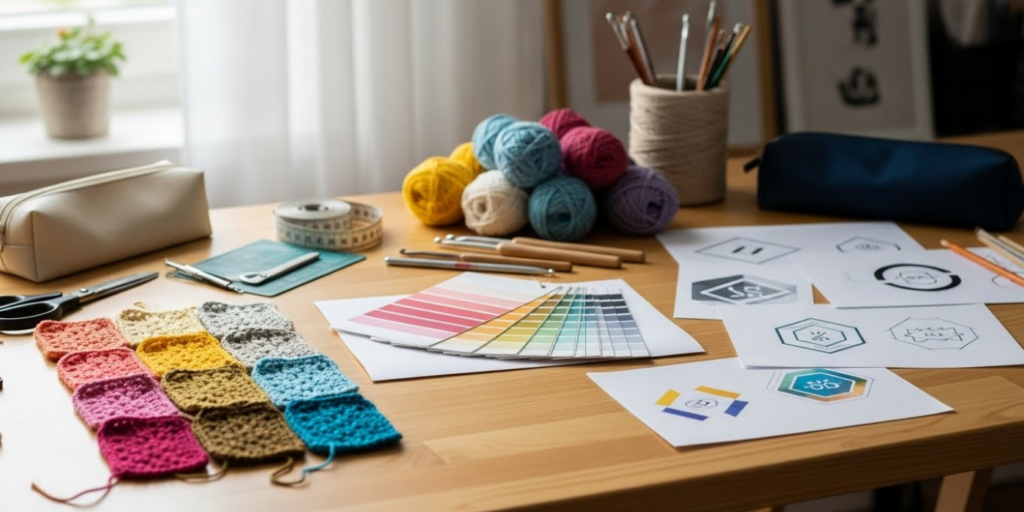
Once you know who you’re talking to and why, it’s time to show up visually in a way that feels cohesive and intentional.
Your visual identity includes:
- Color palette (3–5 core colors max)
- Typography (fonts for logos, social posts, PDF patterns)
- Photography style (bright & airy? moody & textural? lifestyle vs. flat lay?)
- Logo or symbol (even a simple wordmark works)
Pro tips:
- Choose colors that reflect your brand’s mood. Soft neutrals = calm & minimalist; bright primaries = playful & energetic.
- Stick to one or two fonts across all platforms. (Free options like Poppins, Playfair Display, or Montserrat work beautifully.)
- Always photograph your work in consistent lighting and backgrounds. Natural light + wood or linen textures never go out of style in the handmade world.
Example: A brand focused on mindful crochet for anxiety relief might use soft sage greens, cream, and warm beige, with photos showing hands crocheting in quiet morning light—never cluttered or chaotic.
Consistency = recognition. When someone sees your post in a crowded feed, they should know it’s you—even without your logo.
Step 3: Develop Your Unique Brand Voice
Your brand voice is how you “sound” in captions, emails, pattern instructions, and bios. It’s your personality in print.
Ask yourself:
- Are you warm and encouraging?
- Witty and playful?
- Minimalist and direct?
- Educational and supportive?
Avoid generic phrases like “handmade with love” or “unique creations.” Instead, be specific:
❌ “Beautiful crochet accessories.”
✅ “Slow-stitched market bags that carry your groceries—and your values.”
Practical exercise: Write your bio as if you’re explaining your work to a friend over coffee. Now refine it to 2–3 sentences. That’s your brand voice in action.
Also consider tone in patterns:
- Beginner-friendly brands use clear, step-by-step language with encouragement (“Don’t worry—you’ve got this!”).
- Advanced design brands might be more concise and technical.
Why it matters: People buy from people they like. Your voice builds rapport before you’ve even exchanged a single message.
Step 4: Create Signature Elements That Make You Memorable
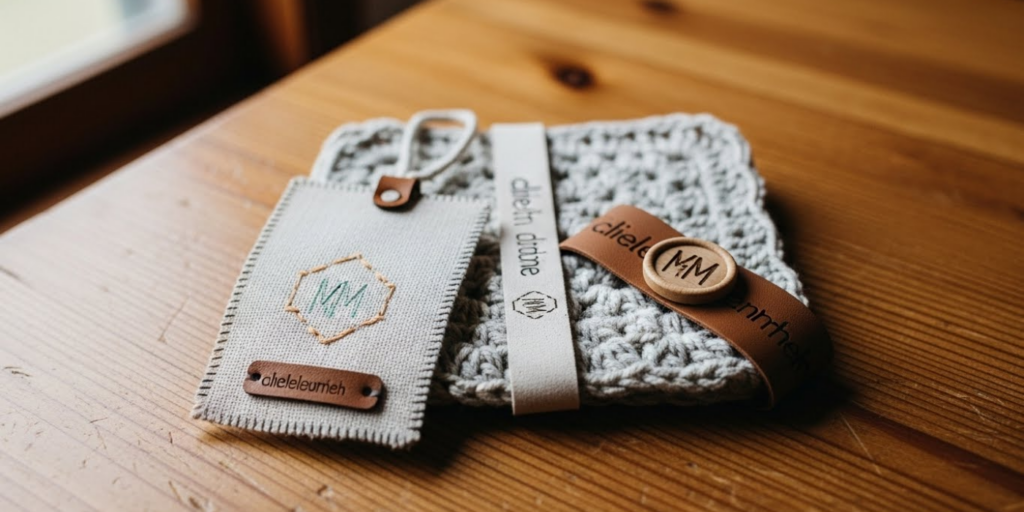
What’s your “trademark” touch—the thing people associate with you?
This could be:
- A signature stitch or construction technique (e.g., seamless magic-loop amigurumi)
- A consistent photo detail (e.g., always including a sprig of eucalyptus or your dog in the corner)
- A pattern layout style (clean grids, hand-drawn charts, specific icons for skill level)
- A catchphrase or hashtag (#StitchWithSoul, #MindfulCrochetMoments)
Take “@TheCozyBeeCrochet” on Instagram—she always uses warm terracotta and cream yarns, photographs her makes with vintage teacups, and signs off posts with “Happy Hooking, friend!” That’s branding.
Bonus: Signature elements make your content shareable and taggable. Fans start saying, “This reminds me of [Your Brand]!”
Pro tip: Don’t overcomplicate it. One or two strong, repeatable elements are more powerful than ten half-hearted ones.
Step 5: Align Your Offerings with Your Brand Promise
Your products should reflect your identity—not contradict it.
If you brand yourself as “eco-conscious,” don’t sell patterns made only with acrylic yarn—unless you address it transparently (“Acrylic for durability + tips to choose sustainable options”).
If you’re “for absolute beginners,” don’t drop a complex lace shawl pattern without clear stitch tutorials.
Every product is a brand touchpoint. Ask:
- Does this pattern/project align with my mission?
- Does it serve my ideal customer’s needs and skill level?
- Does the quality (PDF formatting, photo clarity, editing) match the image I’ve built?
Real impact: A maker who shifted from selling random amigurumi to “heirloom-quality animal friends for anxious kids” saw a 60% increase in pattern sales—because her audience finally knew what to expect.
Consistency builds credibility. When you deliver on your promise repeatedly, customers return—and bring friends.
Step 6: Show Up Consistently Across Platforms
Your brand isn’t just your Etsy shop—it’s everywhere you appear: Instagram, TikTok, YouTube, email newsletters, even your packaging.
Create a simple brand guide (even a one-page Google Doc) that includes:
- Your core colors (with HEX codes)
- Your fonts
- Your brand voice descriptors (“warm, encouraging, clear”)
- Photo guidelines (“natural light, wood surfaces, no filters”)
- Hashtags you always use
Then, apply it everywhere.
- Use the same profile photo and bio link on all socials.
- Keep your Etsy banner and Instagram highlights visually aligned.
- Use the same intro/outro in YouTube videos.
Why this works: The human brain recognizes patterns. The more consistent you are, the more professional and trustworthy you appear—even if you’re a one-person shop.
Time-saver: Create Canva templates for stories, posts, and PDF covers so you’re not starting from scratch each time.
Common Branding Mistakes to Avoid
Even passionate makers fall into these traps:
- Chasing trends instead of values (e.g., switching to neon yarn just because it’s popular, even if it clashes with your calm aesthetic)
- Inconsistent posting (ghosting for weeks, then flooding feeds)
- Trying to be everything to everyone (“I make blankets, toys, hats, sweaters, and home decor!”)
- Neglecting the “behind-the-scenes”—people connect with you, not just your products. Share your process, your struggles, your joy.
Remember: Authenticity > perfection. A slightly blurry photo of you laughing over a frogged project builds more connection than a stock-perfect image with no soul.
Real Success Story: From Hobby to Recognizable Brand
Meet Lena, a former nurse who started @StitchAndBreatheCrochet selling simple dishcloth patterns. At first, she posted randomly—sometimes toys, sometimes blankets. Engagement was low.
Then she asked: Who do I really want to serve? She realized her true passion was helping overwhelmed caregivers find calm through repetitive, meditative stitches.
She rebranded:
- Chose a soft blue-and-cream palette
- Wrote patterns with mindful prompts (“Breathe in on Row 1, out on Row 2”)
- Shared short videos of her crocheting in silence
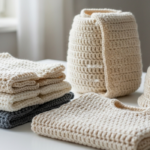
- Focused only on washcloths, scrubbies, and simple scarves
Within six months, her email list grew by 300%, and her customers called her patterns “therapy in a PDF.”
Her secret? She stopped trying to be popular—and started being purposeful.
Conclusion
Building a strong crochet brand identity isn’t about going viral or having a huge budget. It’s about showing up with intention, clarity, and heart. When you know your “why,” speak to your ideal person, and stay consistent in your visuals and voice, you create more than products—you create a community.
Your brand becomes a beacon for the people who need exactly what you offer. And in a world full of noise, that kind of clarity is priceless.
So take a deep breath, grab your hook, and ask yourself: What do I want my name to stand for? Then stitch that answer into everything you do.
We’d love to cheer you on! What’s one element of your brand you’re ready to refine? Share your goal in the comments—or tag a fellow maker who’s building something beautiful. Because the world needs your unique thread in the handmade tapestry. Happy branding—and happy hooking!

Sophia Williams is a crochet enthusiast who found in yarn and hooks a creative way to express calm, patience, and love for handmade art. Focused on the crochet niche, she shares her experience, techniques, and inspiration with those who want to learn, relax, and create meaningful pieces stitch by stitch.