Introduction
You’ve poured your heart into your latest crochet pattern or handcrafted a stunning market bag—but when you post it online, crickets. No likes. No comments. No sales. Sound familiar? In today’s crowded handmade market, talent alone isn’t enough. Whether you sell finished goods on Etsy, publish patterns on Ravelry, or teach workshops, your success depends just as much on how you share your work as on the work itself.
The good news? Social media isn’t a magic trick reserved for big brands. With the right strategies, even solo creators with modest followings can build loyal communities, drive consistent traffic, and turn followers into customers. And the best part? You don’t need fancy equipment or a marketing degree—just authenticity, consistency, and a few smart tactics tailored to crafters like you.
In this guide, we’ll walk you through proven social media strategies specifically for crochet sellers and designers. You’ll learn how to showcase your work so it stops scrollers in their tracks, tell stories that connect (not just sell), choose the right platforms for your goals, and turn casual viewers into raving fans. No fluff, no jargon—just actionable, real-world advice that works. Ready to make your crochet business impossible to ignore? Let’s get started.
Define Your Niche and Ideal Customer
Before you post another photo, ask yourself: Who are you creating for? “Crochet lovers” is too broad. Are you targeting busy moms who want quick baby blankets? Luxury gift shoppers seeking handmade heirlooms? Eco-conscious buyers who love zero-waste accessories?
The more specific your audience, the more resonant your content becomes. For example, designer @hookedonbobbles focuses exclusively on plus-size, body-positive crochet wear—and her Instagram is filled with real women modeling her designs in everyday settings. Her audience knows exactly why they’re there, and they trust her because she speaks directly to their needs.
Start by creating a simple customer persona:
- Name (e.g., “Crafty Carrie”)
- Age, location, lifestyle
- What she struggles with (e.g., “Wants stylish but affordable handmade gifts”)
- Where she spends time online (Etsy? Instagram? Pinterest?)
- What inspires her (cozy aesthetics, sustainability, quick projects)
Why this matters: When you know who you’re talking to, your captions, colors, and even project choices align naturally. Instead of shouting into the void, you’re having a conversation.
Moreover, platforms like Instagram and TikTok reward consistent niches with better algorithmic visibility. If you post amigurumi one day and chunky blankets the next, the algorithm won’t know who to show your content to. But if you’re “the go-to for modern granny square blankets,” it will connect you with exactly the right people.
Choose the Right Platforms (And Master Just One First)
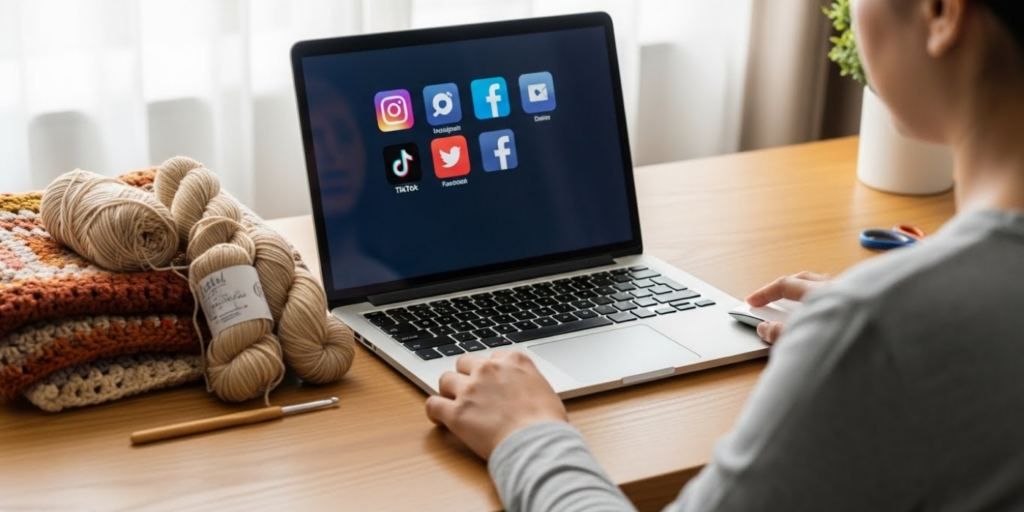
You don’t need to be everywhere. In fact, spreading yourself too thin leads to burnout and inconsistent posting. Instead, focus on one primary platform where your ideal customers hang out—and do it well.
Here’s a quick breakdown:
- Instagram: Best for visual storytelling, Reels, and building a brand aesthetic. Ideal for finished products, tutorials, and behind-the-scenes. Use Carousels to show pattern details and Reels for quick stitch demos.
- TikTok: Perfect for viral reach, especially with time-lapses, satisfying “crochet ASMR,” or relatable “crochet fails.” Great for reaching younger audiences and driving traffic to Etsy shops.
- Pinterest: A long-term traffic driver for patterns and tutorials. Pins can keep sending visitors to your blog or Ravelry page for years. Use vertical pins with clear text overlays like “Free Crochet Scarf Pattern.”
- Facebook Groups: Underrated but powerful. Join (or create) niche groups like “Crochet Pattern Testers” or “Eco-Friendly Crochet Sellers” to build trust and get feedback.
Pro tip: If you sell patterns, prioritize Pinterest and Instagram. If you sell finished goods, lean into TikTok and Instagram Reels.
Start with one platform for 60–90 days. Post consistently (3–5x/week), engage with comments, and analyze what performs. Once you’ve built momentum, expand to a second platform using the same content repurposed (e.g., turn a Reel into a TikTok, or a carousel into a Pinterest pin).
Content That Converts: Show, Teach, and Connect
Great crochet content falls into three buckets: Show, Teach, and Connect. Mix all three to build trust and interest.
1. Show (Inspiration & Product Shots)
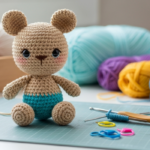
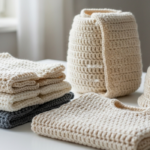
High-quality photos of your finished items in real-life settings—not just flat lays. Show a market bag at the farmer’s market, a cozy sweater on a hike, or a baby blanket during tummy time.
- Use natural light
- Include texture close-ups
- Show scale (e.g., a scarf draped on a person, not just hanging)
2. Teach (Value-Driven Tips)
Share quick tutorials, stitch breakdowns, or “crochet hacks.” Example: “How to Invisible Join in 30 Seconds” or “Fixing Loose Tension in Single Crochet.”
- Keep videos under 60 seconds for Reels/TikTok
- Add captions (85% of videos are watched on mute)
- End with a CTA: “Save this for your next project!”
3. Connect (Behind-the-Scenes & Story)
People buy from people. Share your workspace, your yarn stash chaos, your toddler “helping” with photos, or why you started designing.
- Post “Day in the Life” stories
- Share customer photos (with permission)
- Be vulnerable: “This pattern took 7 tries—here’s what I learned”
Bonus: User-generated content (UGC) is gold. Encourage buyers to tag you when they make your pattern. Repost their photos—they’ll feel seen, and new followers will see social proof.
Remember: Every post should either inspire, educate, or humanize you. Avoid pure sales posts (“Buy my pattern!”) without context. Instead, say: “So many of you asked for a beginner-friendly sweater—here’s the pattern that’s perfect for your first garment!”
Optimize for Discovery: Hashtags, SEO, and Captions That Work
Even the most beautiful post won’t be seen if no one can find it. That’s where discoverability comes in.
On Instagram & TikTok:
- Use niche-specific hashtags like #crochetpattern, #crochetdesigner, #handmadebusiness—not just #crochet (too broad).
- Mix popular (50k–500k posts) and micro hashtags (<20k posts) for better reach.
- Put hashtags in the first comment or at the end of your caption to keep it clean.
On Pinterest:
- Treat pin titles and descriptions like mini blog posts. Include keywords: “Free Crochet Headband Pattern for Beginners – Quick & Easy DIY.”
- Use all 500 characters in the description.
- Link directly to your pattern or shop.
In captions:
- Start with a hook: “Stop frogging your work! Here’s how to fix curling edges…”
- Keep paragraphs short (1–3 lines max)
- End with a question to boost engagement: “What’s your biggest crochet struggle right now?”
Pro SEO tip: If you have a blog or website, include keywords like “beginner crochet sweater pattern” or “quick market bag crochet” in your post captions and alt text for images. Google indexes social content too!
Turn Followers into Customers (Without Being Pushy)

Social media isn’t just about likes—it’s about building a sales funnel. But hard-selling turns people off. Instead, use soft, value-first strategies.
- Offer a freebie: “Download my free stitch guide when you sign up for my newsletter!” (Link in bio)
- Tease new patterns: Post WIPs (works in progress) and ask for input: “Should I add pockets to this cardigan?” Creates investment.
- Use Stories for urgency: “New pattern drops Friday—tap ‘Notify’ so you don’t miss the launch discount!”
- Share testimonials: “Sarah made this blanket in 3 days—look at her gorgeous color combo!” (with photo)
Most importantly: Make your link in bio work for you. Use a tool like Linktree or Beacons to organize:
- Shop
- Free Pattern
- Latest Blog Post
- Email List
- Contact for Commissions
Update it weekly based on your goal (e.g., “Launch Week: Get 20% off the Cozy Cardi Pattern!”).
Consistency Over Perfection: Build a Sustainable Routine
You don’t need daily posts or cinematic videos. Consistency beats perfection every time. A small creator who posts 3x/week with clear value will outperform a “perfect” account that posts once a month.
Try this simple weekly plan:
- Monday: Finished project photo (Show)
- Wednesday: Quick tutorial Reel (Teach)
- Friday: Behind-the-scenes or customer feature (Connect)
- Daily: Reply to comments, engage with 5 other crafters’ posts
Batch-create content on one afternoon: shoot 3 Reels, write captions, schedule with Meta Business Suite (free) or Later.com.
And remember: progress > polish. A slightly shaky video of you fixing a mistake is more relatable—and valuable—than a flawless, sterile post.
Conclusion
Growing your crochet business on social media isn’t about going viral overnight. It’s about showing up consistently, sharing your unique voice, and building real relationships with people who love what you make. By defining your niche, choosing the right platform, creating content that inspires and teaches, and making it easy for followers to support you, you’ll turn casual scrollers into loyal customers—and even friends.
You don’t need thousands of followers to succeed. You need the right 100—people who trust your work, value your expertise, and are excited to buy from you again and again.
So pick one strategy from this guide and try it this week. Maybe it’s filming your first Reel, optimizing your Pinterest pins, or writing a caption that tells a story instead of just listing features. Small steps lead to big results.
What’s your biggest social media struggle as a crochet seller or designer? Are you team Instagram, TikTok, or Pinterest? Share your thoughts in the comments—we’re all learning together! And if this guide helped you, pass it along to a fellow maker who’s ready to grow their handmade business with confidence. Happy hooking—and posting!

Sophia Williams is a crochet enthusiast who found in yarn and hooks a creative way to express calm, patience, and love for handmade art. Focused on the crochet niche, she shares her experience, techniques, and inspiration with those who want to learn, relax, and create meaningful pieces stitch by stitch.