Introduction
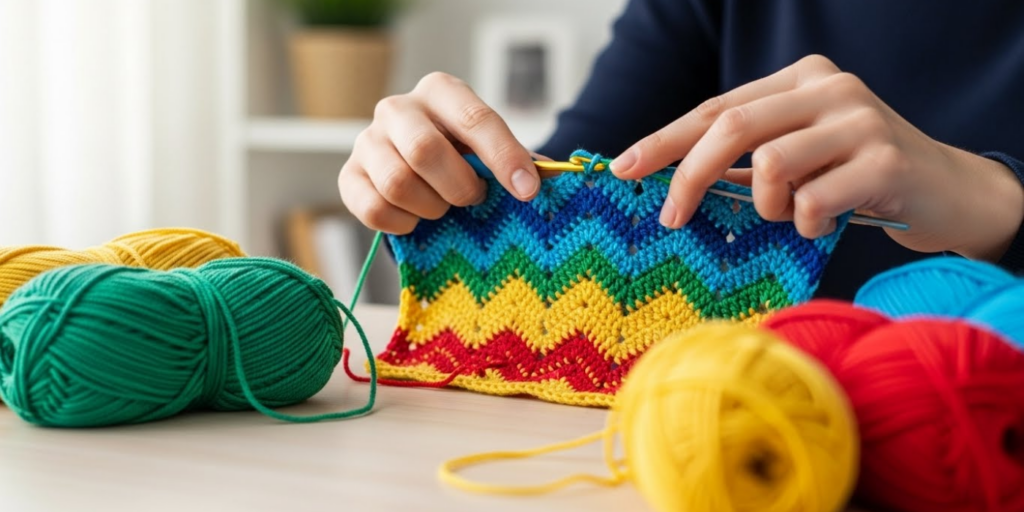
There’s a reason chevron and wave patterns have endured for decades in crochet—they’re bold, rhythmic, and endlessly versatile. From cozy afghans to modern shawls and stylish home décor, these zigzag designs add instant visual drama with just a few well-placed increases and decreases.
But if you’ve ever tried to follow a chevron pattern, you know it can feel like decoding a secret language: “(dc2tog, ch 1, dc in next 5 sts, ch 1, 2 dc in next st) repeat…” Suddenly, your waves look more like wobbles, and your peaks have vanished into a tangled mess.
Don’t worry—you’re not alone. The good news? With a clear understanding of the structure behind chevron and wave patterns, you can master them confidently—and even design your own.
In this guide, we’ll break down the core techniques, stitch math, and troubleshooting tips that make these patterns click. You’ll learn how to count repeats accurately, fix common mistakes, choose the right yarn and hook, and adapt patterns for different projects. Whether you’re making a baby blanket or a boho wall hanging, you’ll soon be stitching clean, crisp chevrons like a pro.
So grab your hook, pick a sunny spot, and let’s turn those intimidating zigzags into your new favorite rhythm.
Understand the Anatomy of Chevron and Wave Patterns
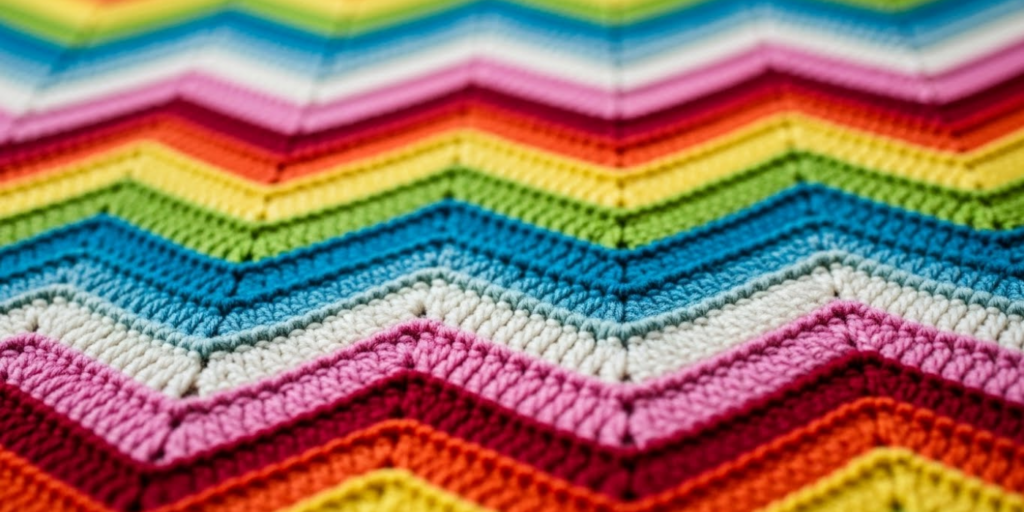
Before you start stitching, it helps to know how these patterns actually work.
At their core, chevron and wave patterns rely on alternating increases and decreases to create peaks and valleys. The difference between the two is subtle but important:
- Chevron patterns have sharp, defined V-shapes with clear points, often created using dc2tog (double crochet two together) for decreases and multiple stitches in one stitch for increases.
- Wave patterns are softer, more fluid undulations, usually achieved with gentler decreases (like sc2tog) or spaced increases that create a rolling effect.
Key structural elements:
- Repeat unit: The number of stitches that make up one full “V” or wave (e.g., 12 stitches per chevron peak).
- Turning chain: Often counts as the first stitch—check your pattern!
- Peak: Created by working multiple stitches into one stitch (e.g., 3 dc in next st).
- Valley: Formed by decreases (e.g., dc2tog).
Example repeat for a classic chevron (in double crochet):
(dc2tog, dc2tog, ch 2, 3 dc in next st, 3 dc in next st, ch 2, dc2tog, dc2tog)
→ This creates one “V” with two valleys and a double peak.
Why this matters: Once you see the pattern as geometry in yarn, it becomes predictable—not chaotic. You’re not just following instructions; you’re building shapes.
Choose the Right Yarn, Hook, and Foundation Chain
Your materials dramatically affect how your chevrons turn out.
Yarn selection:
- Medium-weight (worsted/Aran, Category 4) cotton or acrylic is ideal for beginners—stitches show clearly, and the fabric holds its shape.
- Variegated yarns can enhance the wave effect—but avoid color changes that clash at peaks/valleys.
- Avoid very dark or fuzzy yarns until you’re confident; they hide stitch definition.
Hook size:
- Use the hook recommended on the yarn label—or go one size larger for drape, or one size smaller for tighter definition.
- For lace-weight chevrons (e.g., shawls), use steel hooks and smooth yarns like mercerized cotton.
Foundation chain math:
Chevron patterns require a specific multiple to work. The formula is usually:
Chain = (Multiple × Number of repeats) + Extra chains for symmetry
For example, if a pattern says “multiple of 12 + 3,” and you want 6 peaks:
(12 × 6) + 3 = 75 chains
Pro tip: Always add 2–4 extra chains if you’re unsure. You can adjust at the end of Row 1 by skipping chains or adding decreases.
Swatch first! A small test piece (3–4 repeats) lets you check gauge, drape, and stitch clarity before committing to a large project.
Step-by-Step: Working Your First Chevron Row
Let’s walk through a classic double crochet chevron with 2 peaks per repeat.
Pattern repeat:
(dc2tog, dc2tog, ch 2, 3 dc in next st, 3 dc in next st, ch 2, dc2tog, dc2tog)
→ This uses 18 stitches per full “mountain-valley-mountain” sequence.
Row 1 instructions:
- Chain 75 (multiple of 18 + 3 for symmetry).
- Dc in 4th ch from hook (counts as first dc + ch-1).
- Dc in next 5 chains.
- First valley: dc2tog in next 2 ch, dc2tog in next 2 ch.
- Ch 2 (this forms the valley space).
- First peak: 3 dc in next ch, 3 dc in next ch.
- Ch 2.
- Second valley: dc2tog, dc2tog.
- Repeat from step 3 across.
- End with 6 dc in last few chains (to mirror the start).
Key tips while stitching:
- Count your stitches after every repeat. It’s easy to lose track in decreases.
- Mark valleys and peaks with stitch markers—this prevents confusion on Row 2.
- Keep tension consistent: valleys can get tight; peaks can get loose. Adjust as you go.
Row 2 and beyond:
- Turn, ch 3 (counts as first dc).
- Work the same repeat—but into the stitches below, not the chains.
- Always work peaks into the center of the previous peak, and valleys into the ch-2 spaces.
This rhythm becomes meditative once you lock into it.
Troubleshoot Common Mistaks and Keep Edges Straight
Even experienced crocheters hit snags with chevrons. Here’s how to fix the most frequent issues:
Problem #1: Peaks are leaning or uneven
- Cause: Not working increases into the exact center stitch.
- Fix: Identify the “middle” of the previous peak (often the 3rd dc of a 5-dc group) and work your new increases there.
Problem #2: Edges are scalloping or wavy
- Cause: Inconsistent start/end stitches or skipping turning chains.
- Fix: Always work the same number of stitches at the beginning and end (e.g., 6 dc at both ends). Use stitch markers to track.
Problem #3: Pattern drifts or loses symmetry
- Cause: Miscounting repeats or skipping a decrease.
- Fix: Place a stitch marker every 2–3 repeats. Count valleys—each row should have the same number.
Problem #4: Fabric is too stiff or too loose
- Cause: Hook size mismatch or tight tension in decreases.
- Fix: Try a larger hook for drape, or consciously relax your hands when working dc2tog.
Prevention is key: Count your valleys at the end of each row. If you have 5 valleys on Row 1, you should have 5 on Row 10. If not, frog back to the error.
And remember: blocking can rescue minor imperfections. A light steam or wet block opens up the pattern and evens out tension.
Customize and Design Your Own Chevron Projects
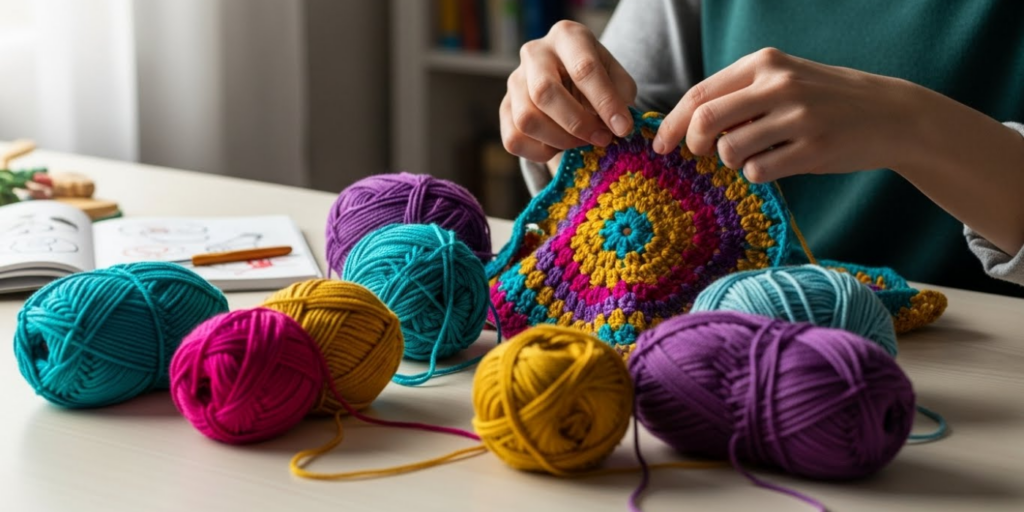
Once you’ve mastered the basics, get creative!
- Adjust scale: Use single crochet for tiny ripples (baby blankets) or treble crochet for dramatic waves (wall hangings).
- Play with color: Striping every 2–4 rows emphasizes the zigzag. Try ombre yarn for a sunset effect.
- Add borders: A simple single crochet edge or picot trim frames the pattern beautifully.
- Combine with other stitches: Insert shell stitches at peaks for texture, or alternate chevron rows with solid rows for contrast.
Project ideas:
- Baby blanket: Soft cotton, small-scale chevron, pastel stripes
- Boho pillow cover: Chunky yarn, oversized waves, fringe edging
- Lace shawl: Thread crochet, delicate wave pattern, blocked to perfection
- Kitchen towel: Tight gauge, cotton yarn, reversible chevron stitch
You can even design your own repeat:
- Decide how many stitches per peak (e.g., 5 dc).
- Choose decrease type (dc2tog for sharp, sc2tog for soft).
- Calculate your multiple: (peak stitches + valley stitches) × 2.
The math is your friend—not your enemy.
Conclusion
Crocheting intricate chevron and wave patterns isn’t about perfection—it’s about understanding the rhythm of increases and decreases that create movement in your fabric. Once you see the structure behind the stitches, these designs become not just manageable, but deeply satisfying to work.
We’ve covered how to decode pattern anatomy, choose ideal materials, execute clean peaks and valleys, troubleshoot errors, and customize your own projects. These skills turn intimidating zigzags into a joyful, flowing practice.
So the next time you pick up a chevron pattern, remember: every wave begins with a single stitch. Trust the process, count with care, and let the rhythm carry you.
Now we’d love to hear from you: What’s your favorite project to make with chevron patterns? Have you ever designed your own wave repeat? Share your color combos, yarn choices, or hard-won tips in the comments below—your creativity might inspire another crocheter to pick up their hook and ride the wave! 🌊🧶✨
Sophia Williams is a crochet enthusiast who found in yarn and hooks a creative way to express calm, patience, and love for handmade art. Focused on the crochet niche, she shares her experience, techniques, and inspiration with those who want to learn, relax, and create meaningful pieces stitch by stitch.