Introduction
Imagine wearing earrings so light you forget they’re there—yet so intricate, strangers stop you to ask, “Where did you get those?” Now imagine making them yourself, in an afternoon, with just a hook, some thread, and a sparkle of creativity.
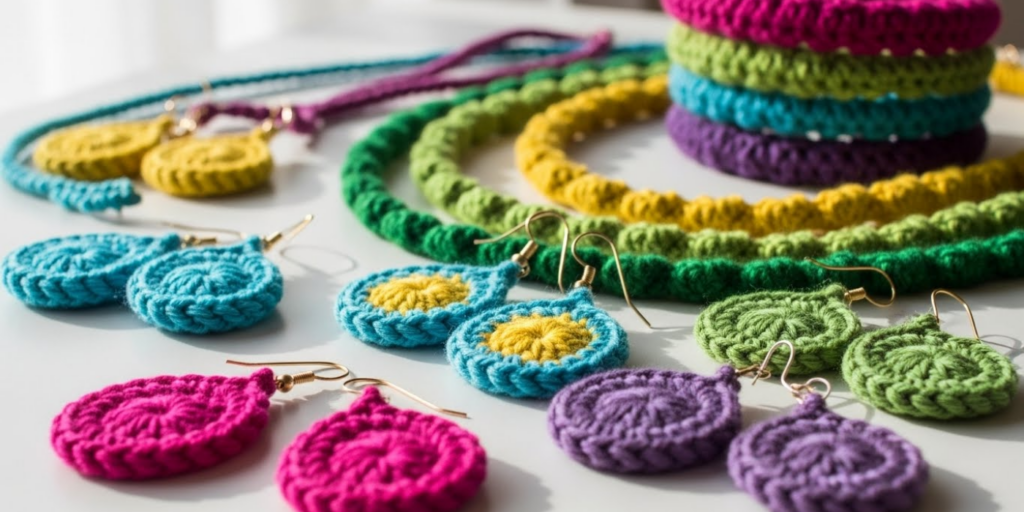
Crochet jewelry might sound like a niche craft, but it’s one of the most rewarding ways to blend fiber art with personal style. From delicate lace bracelets to bold statement necklaces, handmade crochet accessories offer unmatched texture, customization, and charm—all while costing a fraction of store-bought jewelry.
In this guide, you’ll discover why crochet jewelry is more than just a craft trend. We’ll walk you through the best materials for drape and durability, share beginner-friendly techniques (including how to avoid common pitfalls like bulkiness or sagging), and showcase versatile patterns you can finish in a single sitting. Whether you’re crafting for yourself, gifting a meaningful piece, or even starting a small handmade business, you’ll find everything you need to create beautiful, wearable art. Ready to turn thread into treasure? Let’s begin.
Why Crochet Jewelry? Beauty, Affordability, and Personal Expression
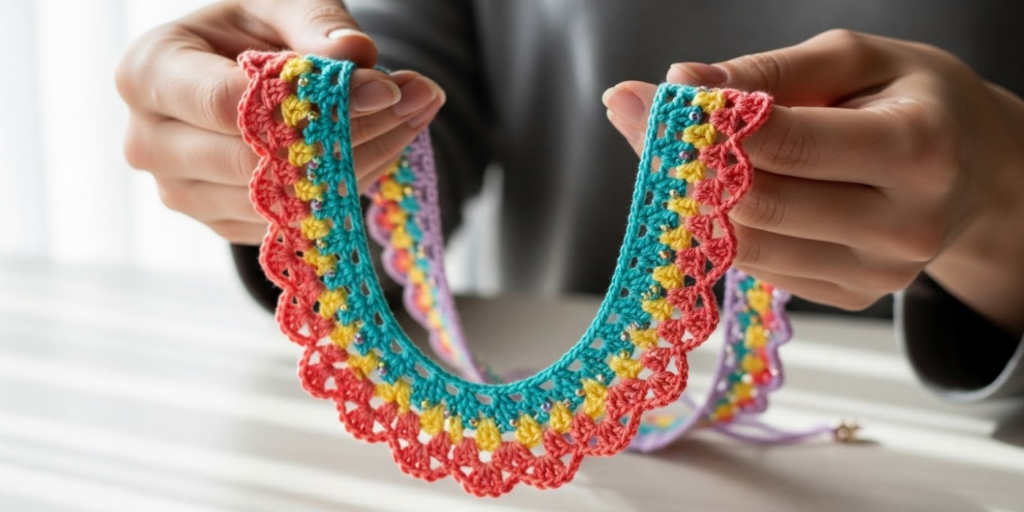
Crochet jewelry stands out in a world of mass-produced accessories for three powerful reasons: uniqueness, affordability, and emotional value.
Unlike generic fashion jewelry that tarnishes or breaks within weeks, handmade crochet pieces are lightweight, hypoallergenic, and endlessly customizable. Sensitive ears? Skip metal posts and use polymer clay or wooden earring hooks. Prefer earthy tones? Dye your thread with natural pigments. Want to match your outfit exactly? You’re the designer.
Moreover, it’s astonishingly budget-friendly. A single skein of size 10 crochet thread costs under $3 and can yield dozens of pairs of earrings or several bracelets. Add a few beads or findings, and you’ve got luxury-looking pieces for less than the price of a coffee.
But perhaps the greatest appeal is personal meaning. A crocheted pendant made with thread from your grandmother’s stash, or a bracelet in your wedding colors, carries a story no store-bought item can replicate. And because each piece is made by hand, no two are exactly alike—yours is truly one of a kind.
As sustainability becomes more important, crochet jewelry also offers an eco-conscious alternative to fast fashion. You’re using natural fibers, reducing waste, and creating items meant to last.
Choosing the Right Materials: Thread, Hooks, and Findings
Success in crochet jewelry starts with the right foundation. Unlike blankets or garments, jewelry demands fine, smooth materials that hold shape without bulk.
Best Yarns and Threads:
- Size 10 or Size 20 Crochet Thread: The gold standard. Mercerized cotton (like DMC or Aunt Lydia’s) is smooth, strong, and holds crisp stitches. Size 10 is ideal for beginners; Size 20 creates ultra-fine, lace-like pieces.
- Linen or Bamboo Thread: Offers beautiful drape and a subtle sheen—great for elegant necklaces.
- Fine Metallic Thread (sparingly): Adds shimmer but can be tricky to work with. Best blended with cotton.
- Avoid: Bulky yarns, fuzzy fibers, or anything with too much stretch—they’ll look sloppy and lose shape.
Hooks Matter—A Lot
Use steel hooks (sizes 0.6mm–1.5mm) for thread work. They’re slim, precise, and glide smoothly through tight stitches. A size 1.0mm hook pairs perfectly with Size 10 thread; go smaller for Size 20.
Essential Findings:
- Earring hooks (stainless steel or gold-plated)
- Jump rings (for attaching pendants)
- Lobster clasps and chain extensions (for necklaces/bracelets)
- Beads (glass, seed, or wooden—choose small holes that fit your thread)
Pro Tip: Always pre-wax your thread with beeswax or thread conditioner. It reduces fraying, adds stiffness, and helps stitches hold their shape—critical for structural integrity.
Essential Techniques for Lightweight, Durable Crochet Jewelry
The key to professional-looking crochet jewelry is precision, tension control, and finishing.
Start with Tight, Even Tension
Unlike garments where drape is desired, jewelry needs firm stitches to avoid sagging. Keep your thread taut (but not strangled!) and work over a consistent rhythm.
Master These Stitches:
- Chain (ch) and Slip Stitch (sl st): For delicate chains, connectors, and edgings.
- Single Crochet (sc): The backbone of most motifs. Work tightly for structure.
- Double Crochet (dc) and Shell Stitches: For bolder pendants or floral motifs.
- Picot Stitch: Adds elegant scalloped edges—perfect for earrings or bracelet cuffs.
Blocking Is Non-Negotiable
After crocheting, block every piece to set its shape. Pin your motif to a foam board, spritz with water or starch, and let dry completely. This transforms a floppy circle into a crisp, professional pendant.
Secure All Ends Meticulously
Weave in every thread end with a tapestry needle, then add a tiny dot of fabric glue for extra hold. Jewelry gets tugged, twisted, and worn daily—loose ends mean unraveling.
Work in Good Light
Tiny stitches demand visibility. Use a magnifying lamp or daylight LED to avoid missed loops or uneven tension.
Remember: small scale means small mistakes show. Slow down, breathe, and treat each piece like wearable art—which it is.
5 Beginner-Friendly Crochet Jewelry Patterns to Try Today
You don’t need advanced skills to create stunning accessories. These simple, fast projects build confidence and yield gorgeous results:
1. Classic Crochet Thread Earrings
Make a tiny ring (6–8 chains joined), work 1 round of sc, then add picots. Attach to earring hooks. Takes 15 minutes. Perfect for beginners!
2. Beaded Bangle Bracelet
Crochet a narrow tube (using spiral rounds of sc), string seed beads onto your thread as you go, then join ends with a decorative clasp. Flexible, lightweight, and sparkly.
3. Floral Pendant Necklace
Create a 5-petal bullion or shell-stitch flower (about 1.5″ wide), block it flat, then sew a jump ring to the back. Hang from a delicate chain. Looks expensive—costs pennies.
4. Geometric Stud Earrings
Crochet miniature squares, triangles, or hexagons (8–10 stitches per side), stiffen with fabric glue, and glue to stud earring backs. Modern, minimalist, and trendy.
5. Layered Choker
Make 2–3 thin chains of varying lengths using slip stitches, add tiny tassels or beads at intervals, and attach to a lobster clasp. Boho-chic in under an hour.
Bonus Tip: Use contrasting thread colors for ombre effects, or dip finished pieces in tea for a vintage look. Creativity has no limits!
Advanced Touches: Adding Beads, Color, and Texture
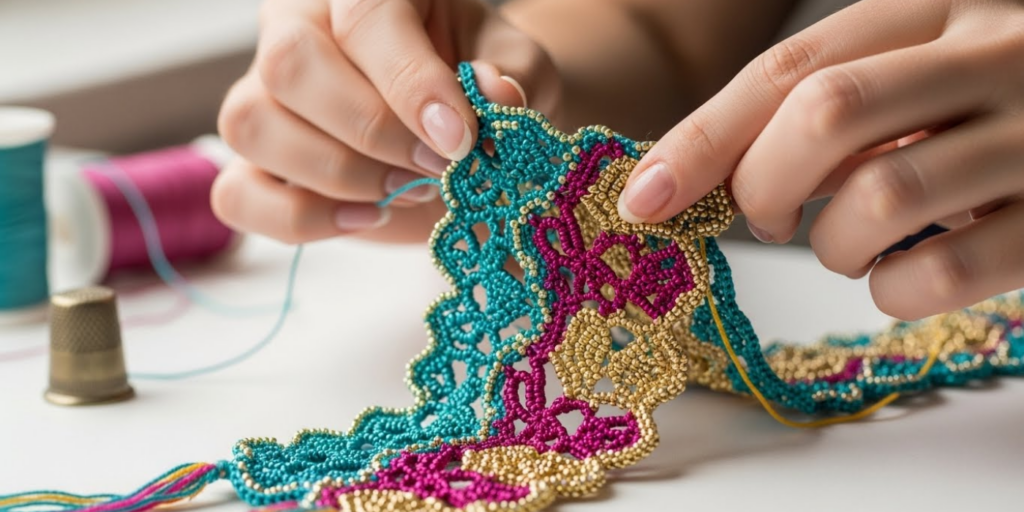
Once you’re comfortable with basics, elevate your designs with artistic details:
Bead Integration
- Pre-string beads onto your thread before you start, then pull them into place as you crochet.
- Use size 11/0 seed beads—they slide easily on fine thread and add subtle sparkle.
- Try beaded picots: work a picot, slide a bead onto the loop, then complete the stitch.
Color Techniques
- Stripes: Change thread color every few rounds (weave ends securely!).
- Ombré: Use hand-dyed gradient thread or blend two solid colors gradually.
- Dip-dye: After blocking, dip just the tips of a pendant in fabric dye for a watercolor effect.
Texture Play
Combine stitches: a shell-stitch flower with a bullion-stitch center, or a lace mesh background with raised popcorn details. Texture adds dimension under light.
Stiffening for Structure
For 3D pieces (like roses or boxes), use diluted fabric stiffener (1:1 with water). Dip the piece, reshape, and dry over a mold. It becomes rigid yet flexible—ideal for brooches or cufflinks.
These touches turn simple motifs into gallery-worthy wearable art.
Caring for and Wearing Your Crochet Jewelry
Because these pieces are made of fiber, they require gentle handling—but with care, they’ll last for years.
Wear Tips:
- Put jewelry on after applying perfume, lotion, or hairspray (chemicals can weaken fibers).
- Avoid wearing in the shower, pool, or heavy rain.
- Store flat in a jewelry box with anti-tarnish strips to prevent dust and moisture.
Cleaning:
- Spot-clean with a damp cloth.
- For deeper cleaning, hand-wash in cool water with mild soap, reshape, and air-dry flat.
Durability Boosters:
- Spray finished pieces with clear fabric protector (like Scotchgard) to repel moisture.
- Reinforce stress points (like where a jump ring attaches) with a drop of jewelry glue.
And remember: minor wear is part of the charm. A slightly softened edge tells a story of being loved and worn.
Why Handmade Jewelry Matters in a Mass-Produced World
In an era of disposable fashion, choosing to make—or wear—handmade jewelry is a quiet act of resistance. It says: I value craftsmanship. I honor slowness. I believe beauty lies in imperfection.
Every loop you crochet carries your attention, your time, your intention. That energy doesn’t just stay in the thread—it radiates outward. When someone compliments your earrings, you’re not just sharing an accessory. You’re sharing a piece of your creativity, your patience, your story.
And for the maker, there’s deep joy in transforming humble thread into something that adorns, empowers, and connects. Jewelry is deeply personal—it touches the skin, frames the face, accompanies life’s moments. To craft it by hand is to participate in an ancient tradition of adornment, reimagined through your own hands.
Conclusion
Crochet jewelry is more than a craft—it’s a gateway to wearable self-expression that’s affordable, sustainable, and deeply personal. By choosing the right threads, mastering tight tension, blocking meticulously, and experimenting with beads and color, you can create accessories that rival boutique pieces in beauty and uniqueness.
We’ve covered everything from beginner patterns like beaded bangles and thread earrings to advanced tips for texture, care, and meaning. The message is clear: you don’t need metal or machinery to make stunning jewelry—just a hook, some thread, and your imagination.
So why not start tonight? Clear a small space, thread your tiniest hook, and make a single pair of earrings. You might just discover a new passion—and a new way to carry your creativity with you, every day.
We’d love to see what you create! Have you tried crochet jewelry before? What’s your dream piece to make? Share your ideas, photos, or questions in the comments below. And if this guide inspired you, pass it on to a friend who’d love to wear their handmade art. Happy stitching!

Sophia Williams is a crochet enthusiast who found in yarn and hooks a creative way to express calm, patience, and love for handmade art. Focused on the crochet niche, she shares her experience, techniques, and inspiration with those who want to learn, relax, and create meaningful pieces stitch by stitch.