Introduction
Imagine looking at a hand-crocheted tapestry, a sweater with intricate geometric motifs, or an amigurumi with lifelike shading—and thinking, “I could never do that.” Now imagine realizing it’s all built with techniques you already know… just layered, planned, and executed with intention.
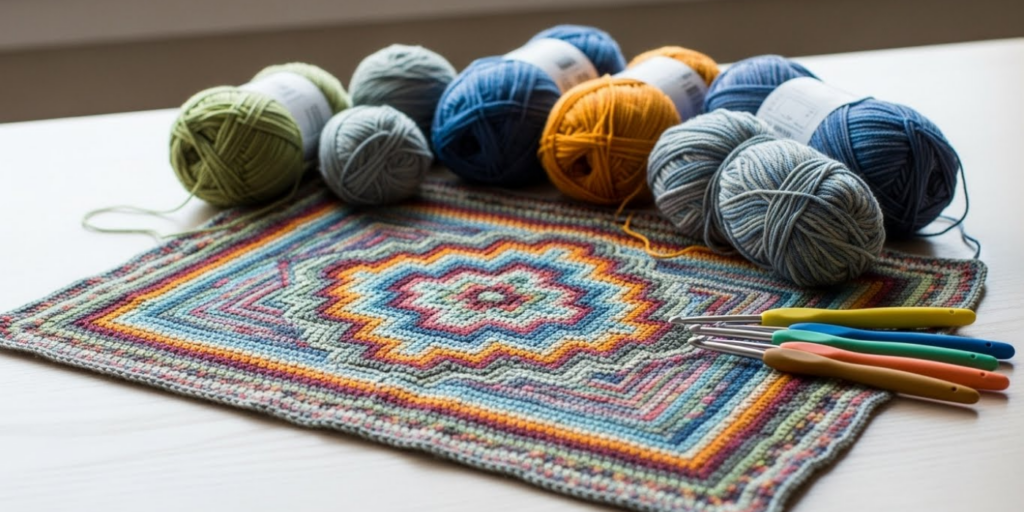
Colorwork is where crochet transcends craft and becomes art. But moving beyond simple stripe patterns into complex, multi-hued designs can feel overwhelming. The good news? Advanced colorwork isn’t about magic—it’s about method. With the right strategies, even intricate-looking projects become achievable.
In this article, we’ll dive into four powerful colorwork techniques used by seasoned crocheters: tapestry crochet, intarsia, fair isle (stranded colorwork), and mosaic crochet. You’ll learn how each works, when to use it, and practical tips to avoid common pitfalls like tangled bobbins, loose floats, or color bleeding. We’ll also cover yarn selection, tension control, and planning tools that make complex projects smoother from start to finish.
Whether you’re designing your own garment, tackling a pixel-perfect blanket, or bringing a cartoon character to life, these techniques will give you the confidence—and control—to make your vision real.
1. Tapestry Crochet: Weaving Color into Every Stitch
Tapestry crochet is the go-to technique for dense, detailed designs with crisp color changes, like mandalas, logos, or pictorial blankets. The secret? You carry unused colors inside your stitches as you work, creating a double-layered, sturdy fabric.
How it works:
While crocheting with your main color, you hold the inactive yarn snugly against the back of your work and stitch over it. When it’s time to switch, you simply start using the carried yarn while trapping the previous one.
Why it’s powerful:
- Allows for pixel-perfect precision (ideal for charts and graphs)
- Creates a firm, non-stretchy fabric—great for bags, coasters, or structured wearables
- All color changes happen on the right side, so your design stays sharp
Pro tips for success:
- Use worsted-weight cotton or tightly spun acrylic—these hold tension well and minimize “pokies” (stray color showing through).
- Keep floats short—if you’re not using a color for more than 3–4 stitches, cut and rejoin to avoid bulk.
- Practice tension control: Too tight, and your fabric curls; too loose, and the carried yarn shows. Aim for “firm but flexible.”
Real-life example:
Maria wanted to crochet a map of her home state with county lines in contrasting colors. Tapestry crochet let her follow a pixel chart exactly—no guesswork, no messy ends.
2. Intarsia Crochet: Bold Blocks of Color Without the Floats
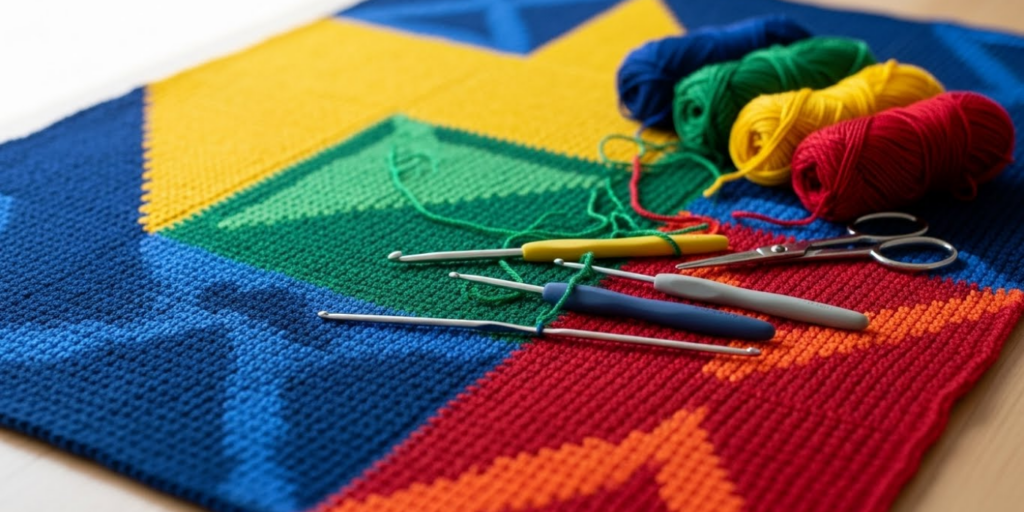
If your design features large, isolated color blocks (like a heart on a sweater or a star on a blanket), intarsia is your best friend. Unlike tapestry or fair isle, intarsia uses separate yarn bobbins for each color section, so there are no long floats on the back.
How it works:
At each color change, you twist the two yarns together once to prevent holes, then continue with the new color. Each section is worked with its own yarn supply.
Ideal for:
- Sweaters with big motifs
- Geometric afghans
- Amigurumi with solid-colored patches (like a ladybug’s spots)
Key considerations:
- Bobbins are essential—use small plastic bobbins or make DIY ones from cardboard to keep yarn tangle-free.
- Twist consistently (always the same direction) to avoid gaps or puckering.
- Plan your bobbins ahead: A chart with color zones helps you estimate how many you’ll need.
Common mistake to avoid:
Don’t carry yarn across sections! That defeats the purpose and adds unnecessary bulk. Cut and rejoin if colors reappear far apart.
Bonus tip: Use contrasting thread to temporarily mark twist points until the technique becomes second nature.
3. Fair Isle (Stranded) Crochet: Soft Gradients and Repeating Motifs
Inspired by traditional Nordic knitting, stranded colorwork in crochet uses two (or more) colors per row, carried loosely across the back. It’s perfect for all-over patterns, like snowflakes on a yoke or stripes with subtle texture.
Why choose fair isle?
- Creates lightweight, flexible fabric with beautiful drape—ideal for shawls, cowls, or cardigans
- Allows for complex repeats without cutting yarn constantly
- Offers blended visual effects, especially with tonal or variegated yarns
Mastering the float:
The biggest challenge? Managing float tension. Floats that are too tight pull the fabric; too loose, they snag.
- Keep floats under 5–7 stitches. For longer spans, catch the float by working a stitch around it.
- Use a smaller hook size (½–1 mm smaller than usual) to tighten the front stitches and hide floats.
- Try the “yarn stranding guide” method: hold one color over your index finger, the other over your middle finger for smooth, even tension.
Yarn tip: Choose non-fuzzy, smooth yarns like sport-weight merino or mercerized cotton—they show off the pattern without obscuring it.
4. Mosaic Crochet: Complex Looks with Minimal Hassle
Here’s a game-changer: mosaic crochet creates intricate, interlocking color patterns using only one color per row. It relies on slip stitches and chain spaces to “skip” sections that will be filled in by the contrasting color on alternate rows.
Why it’s brilliant for advanced beginners:
- No carrying multiple yarns
- No color changes mid-row
- Charts look complex, but execution is surprisingly simple
How it works:
- Row 1 (Color A): Work double crochets and slip stitches over Color B’s chain spaces.
- Row 2 (Color B): Work into the chain spaces left by Color A, creating the illusion of diagonal or zigzag patterns.
Perfect for:
- Blankets with Moroccan tile or herringbone effects
- Modern scarves with sharp lines
- Projects where you want reversible fabric (many mosaic patterns look great on both sides)
Pro advice:
- Use high-contrast colors (e.g., black/white, navy/cream) so the pattern pops.
- Count carefully—mosaic relies on precise placement of slip stitches and chains.
- Try mosaic Tunisian crochet for even denser, woven-like results.
Fun fact: Many mosaic patterns are mathematically inspired, making them a favorite among engineers and designers who love structure and symmetry.
Planning & Tools: Setting Yourself Up for Success
Even the best technique fails without smart planning. Here’s how to prep like a pro:
- Use graph paper or digital tools: Apps like Stitch Fiddle or MyBobby allow you to design or import charts, assign colors, and generate written instructions.
- Swatch in your actual yarns: Colors behave differently in person vs. screen. Test tension and float behavior before committing.
- Label bobbins clearly: Use washi tape or sticky notes to mark colors—especially important in intarsia.
- Block your finished piece: Blocking evens out tension inconsistencies and makes colorwork look polished and professional.
Also consider yarn weight consistency: Mixing different brands or fiber types in one project can cause puckering or uneven drape. Stick to the same line (e.g., all Lion Brand Wool-Ease or all Paintbox Aran) for best results.
Troubleshooting Common Colorwork Challenges
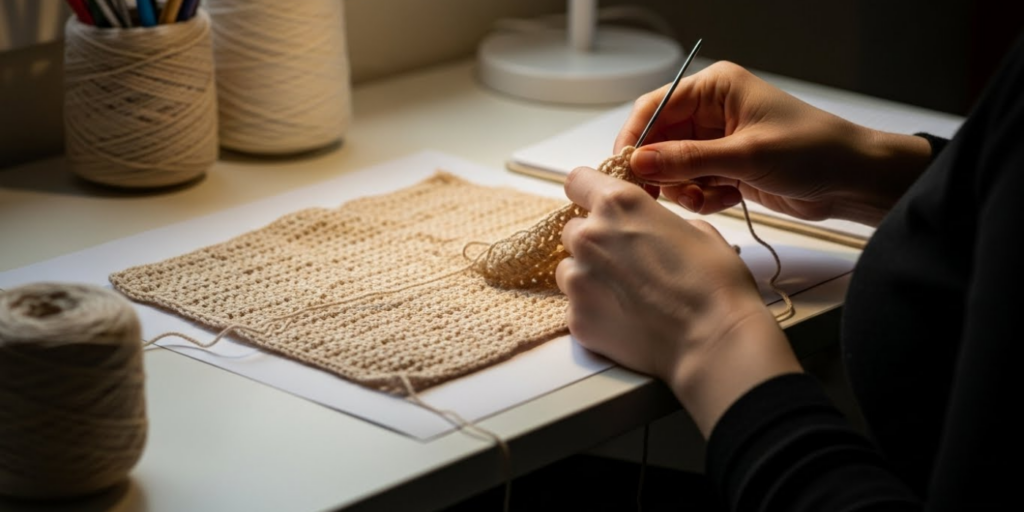
Even experienced crocheters hit snags. Here’s how to solve them:
Problem: Colors bleeding during washing
→ Always pre-wash dark or red yarns separately. Choose colorfast brands (like Cascade 220 or Berroco Ultra Wool).
Problem: Back looks messy
→ Not all backs need to be perfect—but for wearable items, catch long floats every 3–4 stitches by working over them.
Problem: Fabric is too stiff (tapestry) or too loose (fair isle)
→ Adjust hook size: go up for flexibility, down for structure. Swatching is non-negotiable.
Problem: Losing your place in a chart
→ Use a magnetic board or highlight completed rows. For circular projects, place stitch markers at pattern repeats.
Remember: Imperfections add character—especially in handmade art. But smart prep minimizes stress and maximizes joy.
Conclusion: Turn Complexity into Creativity
Advanced colorwork isn’t about perfection—it’s about expression. Whether you’re weaving a family story into a tapestry blanket, stitching a fair isle yoke inspired by your travels, or designing mosaic pixel art of your pet, these techniques give you the tools to bring bold ideas to life.
We’ve explored tapestry for precision, intarsia for bold blocks, fair isle for flowing repeats, and mosaic for deceptive simplicity—all backed by planning, tension control, and the right yarn choices. Each method opens a new door in your creative journey.
So don’t be intimidated by charts with dozens of colors or patterns labeled “intermediate.” Break them down. Swatch. Practice one technique at a time. The most stunning projects are built one thoughtful stitch at a time.
Now it’s your turn: Which colorwork technique have you always wanted to try? Have you tackled a complex project that surprised you with its results? Share your experiences, questions, or photos in the comments below! And if this guide inspired you, pass it on to a fellow crocheter who’s ready to level up. Happy stitching—your masterpiece is waiting to be made.

Sophia Williams is a crochet enthusiast who found in yarn and hooks a creative way to express calm, patience, and love for handmade art. Focused on the crochet niche, she shares her experience, techniques, and inspiration with those who want to learn, relax, and create meaningful pieces stitch by stitch.