
Introduction
You’ve just finished your latest creation—a chunky cable-knit blanket, a set of adorable amigurumi owls, or maybe a collection of boho market bags. Your hands are tired, your heart is full, and now you’re wondering: Could someone actually pay for this?
The answer is a resounding yes. With the rise of handmade culture and conscious consumerism, there’s never been a better time to turn your crochet hobby into a small business. From global online marketplaces to cozy local craft fairs, countless avenues exist to share your work—and get paid for it.
But where should you start? How do you choose between Etsy and Instagram? Should you sell at farmers’ markets or church bazaars? And how do you avoid wasting time (and money) on platforms that don’t fit your style or goals?
In this guide, we’ll explore the best places to sell crochet items, both online and in person. We’ll break down the pros, cons, fees, audience types, and real-world tips for each option—so you can choose the right mix for your skills, schedule, and dreams. Whether you’re looking to earn extra cash or build a full-time brand, you’ll find a path that works for you.
Let’s turn your yarn stash into a storefront.
Online Option #1: Etsy – The Handmade Giant
For most crocheters, Etsy is the obvious first stop—and for good reason. It’s the world’s largest online marketplace dedicated to handmade, vintage, and craft supplies, with over 95 million active buyers as of 2025.
Why Etsy works for crochet sellers:
- Buyers come specifically looking for unique, handcrafted items
- Strong search algorithms favor detailed listings with good photos
- Built-in tools for shipping labels, sales tax, and inventory
Key considerations:
- Fees: $0.20 per listing + 6.5% transaction fee + payment processing (~3%)
- Competition is fierce: Standing out requires excellent product photography, keyword-rich titles (“boho crochet market bag – eco-friendly cotton – handmade tote”), and consistent shop updates
- You’re not just selling a product—you’re selling a brand. Include your story, process photos, and care instructions
Pro tip: Use all 13 photo slots. Show your item in use (e.g., a market bag filled with groceries), close-ups of stitch texture, and size comparisons (like next to a coffee mug).
Real success story: Maya, a stay-at-home mom in Ohio, started selling amigurumi sloths on Etsy during naptime. Within a year, she was earning $1,200/month—enough to cover her kids’ extracurriculars. Her secret? Niche focus + consistent social media cross-promotion.
Etsy isn’t a “set it and forget it” platform—but with effort, it can become a reliable income stream.
Online Option #2: Social Media Marketplaces (Instagram, Facebook, TikTok)
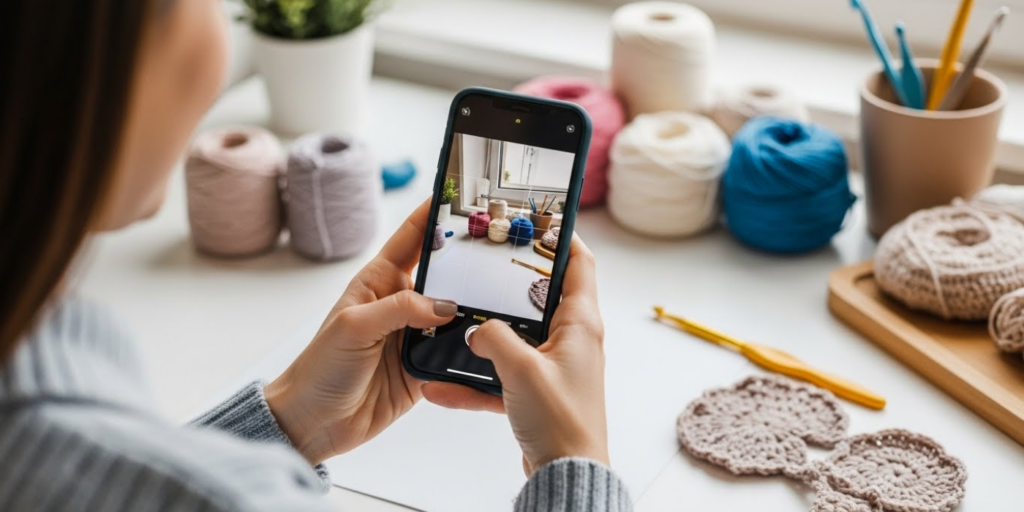
While Etsy is a marketplace, social media is a conversation—and that’s where authentic connections (and sales) happen.
Instagram & Facebook Shops:
- Create a business profile and tag products directly in posts
- Use Instagram Stories’ “swipe up” or “shop now” features
- Join local “Buy/Sell/Trade” or “Handmade” Facebook groups
TikTok Shop:
- Short videos showing your process (e.g., “How I make this $35 crochet clutch in 2 hours”) can go viral
- Link products directly in your bio or through TikTok’s native shopping feature
Why this works:
People buy from people they know, like, and trust. A 30-second video of you finishing a beanie with your dog at your feet builds more rapport than a static product photo.
Best practices:
- Post regularly (3–5x/week) with a mix of finished items, WIPs (works in progress), and behind-the-scenes
- Use hashtags like #handmadecrochet, #crochetbusiness, or #shopsmall
- Always respond quickly to DMs—many buyers message before purchasing
Bonus: Social platforms are free (aside from your time). No listing fees, no commissions—just pure reach.
Caution: Payment and shipping logistics are up to you. Always use tracked shipping and collect payment before mailing.
For many modern makers, social media isn’t just promotional—it’s their primary storefront.
In-Person Option #1: Craft Fairs & Art Markets
There’s something magical about handing your handmade item directly to someone who loves it. Craft fairs, farmers’ markets, and pop-up markets offer immediate feedback, zero shipping hassle, and priceless face-to-face connection.
Pros:
- Keep 100% of your profit (no platform fees!)
- Test new products in real time (“Which color do you prefer?”)
- Build local brand loyalty
Cons:
- Booth fees can range from $25 (small church bazaar) to $200+ (high-end art fair)
- You invest time in setup, travel, and sitting for hours
- Weather and foot traffic are unpredictable
Tips for success:
- Display matters: Use risers, fabric backdrops, and clear pricing
- Offer a small freebie (like a crochet keychain) with purchases over $30
- Bring a square reader or mobile POS to accept cards—many buyers don’t carry cash
- Have business cards or QR codes linking to your Instagram or Etsy
Real-world insight: At a holiday market in Portland, handmade crocheter Lena sold out of her $45 chunky scarves in 3 hours—earning more than she would in a week online. The secret? A well-curated display and a “touch me” basket of samples.
Start small: try a school fundraiser or community fair before investing in expensive booths.
In-Person Option #2: Local Boutiques & Consignment
If you prefer not to staff a booth, consider consignment with local boutiques, gift shops, or even coffee shops that sell local goods.
How it works:
- You provide inventory (e.g., 10 headbands or 5 baby blankets)
- The shop displays and sells your items
- You get 50–70% of the retail price once sold
Benefits:
- Passive income while you create more
- Exposure to a curated, local audience
- Builds credibility (“Oh, you’re the crocheter at Maple & Vine!”)
Challenges:
- You only get paid after items sell
- Some shops require professional labels or UPC codes
- You’ll need a consignment agreement (get one free from Shopify or Etsy Seller Handbook)
How to pitch:
- Bring 3–5 of your best pieces in a neat portfolio
- Research shops that already carry handmade or fiber arts items
- Emphasize what makes you unique: “All my yarn is organic cotton,” or “Each piece is named after a rescue dog”
Consignment works best when your aesthetic matches the shop’s vibe. Don’t pitch chunky blankets to a minimalist home store—do your homework first.
Building a Hybrid Strategy: Online + Offline = Greater Reach
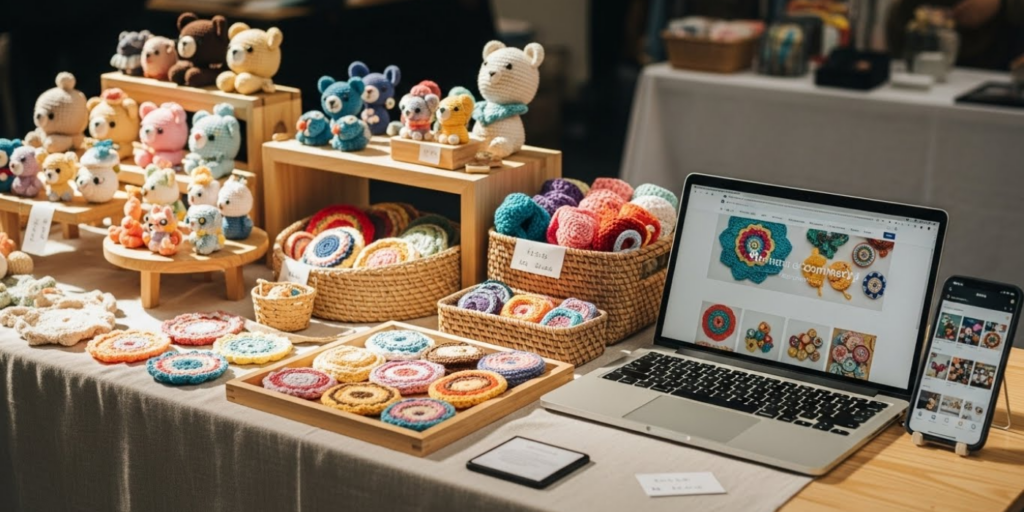
The most successful crochet sellers don’t rely on just one channel—they combine online visibility with in-person trust.
For example:
- Use Instagram to promote your upcoming craft fair booth
- Hand out QR code cards at markets that link to your Etsy shop
- Offer “local pickup” as a free shipping option online
Why this works: Online builds awareness; in-person builds loyalty. A customer who meets you at a market is far more likely to follow you on social media and buy again online.
Pro tip: Create a simple email list (even with just a free Mailchimp account). Offer a 10% discount for sign-ups at events or on your website. Email remains the highest-converting sales channel—even for handmade goods.
Also, track what works. Did 80% of your sales come from Instagram last month? Double down. Are craft fairs your top earner? Apply to better ones.
Your goal isn’t to be everywhere—it’s to be where your ideal customers already are.
Final Thoughts: Start Small, Sell with Heart
Selling crochet isn’t just about profit—it’s about sharing your creativity with people who appreciate the time, care, and soul you stitch into every piece. Whether you sell one beanie or a hundred blankets, you’re part of a growing movement that values handmade over mass-produced.
Don’t wait for “perfect.” Start with one platform. Take one photo. Sign up for one local fair. Momentum builds with action—not planning.
Conclusion
From global platforms like Etsy to neighborhood boutiques and bustling farmers’ markets, you have more options than ever to sell your crochet creations. We’ve covered the top online marketplaces (Etsy, social media), best in-person venues (craft fairs, consignment), and how to blend both for maximum impact. Each channel has its strengths—choose based on your personality, goals, and available time.
Remember: your crochet is valuable. People don’t just buy stitches—they buy stories, care, and connection. Price your work fairly, present it beautifully, and share it confidently.
Now it’s your turn!
Which selling method are you most excited to try? Have you already sold something you crocheted? Share your experience or questions in the comments below! If this guide inspired you, share it with a fellow maker ready to turn their hook into a hustle. Happy creating—and happy selling!

Sophia Williams is a crochet enthusiast who found in yarn and hooks a creative way to express calm, patience, and love for handmade art. Focused on the crochet niche, she shares her experience, techniques, and inspiration with those who want to learn, relax, and create meaningful pieces stitch by stitch.