
Introduction
You’ve just brought home a stunning skein of hand-dyed merino—soft as a cloud, vibrant as a sunset. You set it down for “just a minute” to grab your hooks… and return to find your curious kitten gleefully unraveling it like a toilet paper roll, while your dog sniffs the corner like it’s a chew toy. Meanwhile, the half-finished blanket on your chair collects a fine film of dust, pet hair, and mystery crumbs.
Sound familiar?
For many fiber artists, pets and dust are the silent enemies of a well-loved yarn stash. While our furry companions bring joy (and occasional chaos), and dust is an inescapable part of modern life, both can seriously compromise the quality, cleanliness, and longevity of your yarn. The good news? With a few smart strategies, you can keep your stash pristine—without banishing your pets or turning your home into a sterile lab.
In this guide, we’ll explore practical, humane, and affordable ways to protect your yarn from curious paws, playful teeth, airborne dust, and lingering odors. From clever storage solutions to pet-friendly boundaries and gentle cleaning methods, you’ll learn how to create a crafting space that works for everyone in your household—including the four-legged ones. Let’s keep your yarn safe, clean, and ready to create.
It’s easy to think, “A little pet hair won’t hurt,” or “I’ll just wash it later.” But yarn damage often goes deeper than surface mess.
Dust and allergens accumulate over time, especially on natural fibers like wool or cotton. This not only dulls colors but can also irritate sensitive skin—problematic if you’re making baby clothes or gifts for allergy-prone friends.
Pet hair, while sometimes charmingly “homemade,” is notoriously difficult to remove completely from textured or dark yarns. Worse, pet saliva or oils from paws can stain or weaken fibers, especially delicate silks or plant-based threads.
And then there’s physical damage: a chewed skein, a pulled strand that tangles an entire project, or worse—your pet swallowing yarn (a serious choking or intestinal hazard).
Beyond safety, protecting your yarn is about respecting your investment. Indie-dyed yarns, luxury fibers, and limited editions can cost $30+ per skein. Letting them degrade due to preventable exposure isn’t just wasteful—it’s heartbreaking.
Good news: Most damage is avoidable with simple, consistent habits. You don’t need to choose between pets and yarn—you just need better boundaries.
Pet-Proofing Your Yarn: Smart Storage and Boundaries
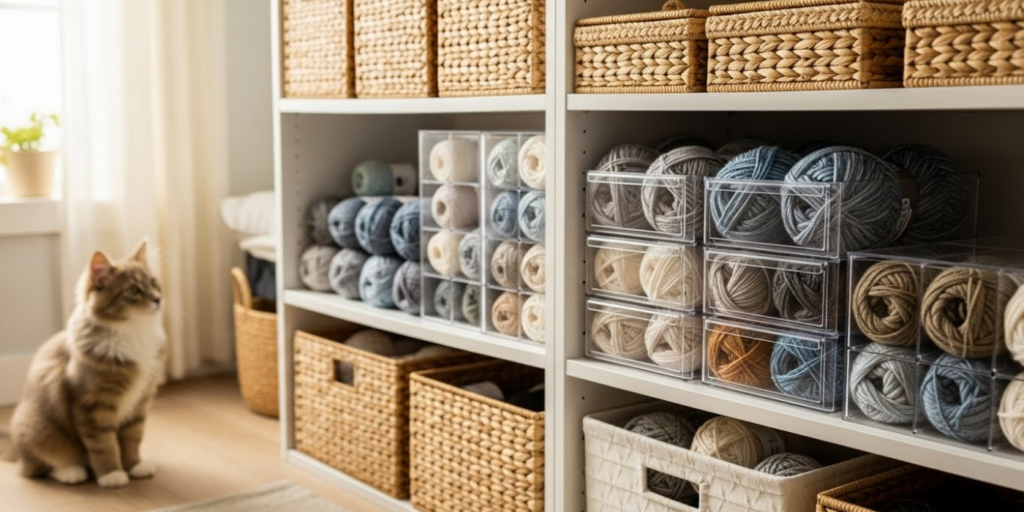
The key to coexisting with pets isn’t hiding your yarn—it’s making it inaccessible without sacrificing accessibility for you.
1. Use Sealed, Opaque Containers
Clear bins might look pretty, but they’re like neon signs to curious cats: “Look what’s inside!” Switch to solid, latching bins (like Sterilite or Rubbermaid) that pets can’t open or see into. Bonus: they block light, which prevents color fading.
2. Store Yarn Off the Floor
Cats pounce; dogs dig. Keep bins on shelves, in closets, or inside cabinets. Even a 24-inch lift makes a huge difference. Over-the-door organizers with zippered pockets are great for small stashes and out of paw’s reach.
3. Create a “Craft-Only” Zone
Designate one room (or even a corner) as your crafting space—and enforce a pet boundary when you’re not actively working. Use baby gates, closed doors, or even scent deterrents (like citrus-scented sprays, which many cats dislike but are safe for yarn).
4. Never Leave Yarn Unattended Mid-Project
That half-finished scarf on the couch? It’s a playground. Get in the habit of putting projects away immediately after stitching—even if it’s just into a zippered project bag.
Pro Tip: Keep a “decoy” ball of plain acrylic yarn in a pet-safe area. Some cats and dogs lose interest in your real stash once they have their own approved toy.
Remember: Punishing pets rarely works. Instead, redirect their energy and make your yarn invisible and unreachable. Prevention beats cleanup every time.
Keeping Dust (and Allergens) at Bay
Even in the cleanest homes, dust settles—especially on soft, fibrous surfaces like yarn. Over time, this leads to discoloration, odor, and reduced shelf life.
Best Practices for Dust Control:
✅ Use Airtight Storage
Vacuum-seal bags or plastic bins with tight gaskets prevent dust infiltration. For long-term storage, add a silica gel packet to absorb moisture and discourage mildew.
✅ Avoid Cardboard and Fabric Bins
Cardboard attracts pests and absorbs humidity. Fabric bins (like cotton totes) breathe—but they also trap dust. Reserve them for active projects only, not long-term stash.
✅ Clean Your Storage Area Regularly
Wipe shelves with a microfiber cloth before placing bins. Vacuum or mop under storage furniture monthly. Dust mites thrive in dark, undisturbed corners—don’t give them a home.
✅ Wash Your Hands Before Handling Yarn
Oils and lotions from your skin can attract dust. Clean hands = cleaner yarn.
✅ Rotate Your Stash
Use the “first in, first out” rule. The longer yarn sits untouched, the more dust accumulates. Regularly review your stash and plan projects to keep fibers in circulation.
For Allergy Sufferers: Consider storing yarn in a room with an air purifier (HEPA-filtered). It reduces airborne particles that settle on fibers.
Safe Cleaning Methods for Yarn Exposed to Pets or Dust
Despite your best efforts, some exposure is inevitable. When it happens, gentle cleaning is key.
For Pet Hair:
- Use a lint roller for surface hair on wound balls.
- For skeins or projects, wrap a piece of masking tape around your hand (sticky side out) and lightly pat—hair lifts right off.
- Never use a vacuum directly on loose yarn—it can tangle or pull fibers.
For Dust or Odors:
- Air it out: Hang yarn in a shaded, well-ventilated area for a few hours. Sunlight can fade colors, so avoid direct sun.
- Steam lightly: Hold a garment steamer 6+ inches away to refresh fibers without wetting them.
- Wash only when necessary: Hand-wash in cool water with a wool-safe detergent (like Soak or Eucalan). Never wring—roll in a towel to remove water, then dry flat.
Never Use:
- Fabric softeners (they coat fibers and reduce absorbency)
- Bleach or harsh chemicals
- Dryers (even on “air fluff”—heat damages elasticity)
Note: Always check yarn labels first! Some fibers (like silk or superwash wool) have specific care needs.
Preventing Accidental Ingestion: A Safety Priority

Yarn may look like a fun toy to pets—but ingestion can be life-threatening. Linear foreign bodies (like string, yarn, or thread) can cause intestinal blockages or “linear foreign body obstructions,” requiring emergency surgery.
Signs your pet has swallowed yarn:
- Vomiting
- Lethargy
- Loss of appetite
- Straining to defecate
Prevention Tips:
- Never let pets play with yarn, even under supervision.
- Use closed project bags with zippers or drawstrings.
- Keep scissors, needles, and small notions in latched containers (they’re choking hazards too).
- If you drop a strand, pick it up immediately—don’t assume it’s “just a little.”
If you suspect ingestion, contact your vet immediately. It’s always better to be safe.
Creating a Pet-Friendly Craft Space That Works for Everyone
You don’t have to banish your pets to protect your yarn. With thoughtful design, your crafting corner can be harmonious.
Try These Ideas:
- Elevated Craft Table: A sturdy desk or kitchen cart (with locking wheels) keeps supplies out of reach. Add bins underneath that latch shut.
- Under-Bed Storage: Rolling bins on casters slide away when not in use—and stay hidden from pets.
- Wall-Mounted Shelves: Install high shelves for your most prized skeins. Label them for easy access.
- Craft Caddy with Handle: A portable tote lets you work anywhere—then store it in a closet when done.
Bonus: Give your pet their own “craft-time” toy—like a stuffed Kong or puzzle feeder—so they’re occupied while you stitch.
The goal isn’t isolation—it’s intentional coexistence. When your space is organized with both your needs and your pet’s instincts in mind, everyone thrives.
A Final Thought: Love, Respect, and Boundaries
Protecting your yarn isn’t about control—it’s about care. Care for your materials, your creative time, and the living beings who share your home. Pets aren’t “problems” to solve; they’re family members who happen to find yarn irresistibly fun.
By setting gentle, consistent boundaries, you honor both your craft and your companions. You’re not hiding your passion—you’re stewarding it wisely.
And in doing so, you model something beautiful: that creativity and compassion can coexist. Your yarn stays clean, your pet stays safe, and your making continues—peacefully, joyfully, and without chewed ends.
Conclusion
Keeping your yarn safe from pets and dust is entirely possible with smart storage, consistent habits, and a little planning. From using airtight containers and elevated shelves to gentle cleaning methods and pet-safe boundaries, the strategies in this guide help you protect your investment while maintaining a loving home for your furry friends.
We’ve covered why protection matters, how to pet-proof your space, dust-control essentials, safe cleaning techniques, and even emergency prevention for accidental ingestion. The core message? You can love both your yarn and your pets—just not at the same time on the living room floor.
So take a few minutes today: tuck that open skein into a sealed bin, close the craft room door, and give your pet a safe toy of their own. Your future self—and your stash—will thank you.
Now we’d love to hear from you: How do you keep your yarn safe from pets or dust? Do you have a clever hack or a funny “yarn heist” story? Share your tips or tales in the comments below! And if this guide helped you, pass it on to a fellow crafter who’s dodging paws and dust bunnies every day. Happy (and safe) stitching!

Sophia Williams is a crochet enthusiast who found in yarn and hooks a creative way to express calm, patience, and love for handmade art. Focused on the crochet niche, she shares her experience, techniques, and inspiration with those who want to learn, relax, and create meaningful pieces stitch by stitch.